Clothing worse for climate than plastic, Zero Waste Scotland report shows

New report from Zero Waste Scotland shows that clothing is contributing more to climate change than plastic.

Clothing is the most environmentally-damaging type of household waste, accounting for nearly a third (32%) of the carbon impacts of Scotland’s household waste despite making up only a small proportion, by weight (4%) of the waste we bin. 

That’s according to Zero Waste Scotland’s new carbon metric report, which highlights the cost to the climate of the items commonly thrown away from homes in Scotland. 

ZWS data suggests only 5% of people in Scotland are aware that clothing is the worst type of waste for the environment, with 61% saying it’s plastic.

The data also shows that 14% say they think about the environmental impact of a garment before they buy it.

Now, Zero Waste Scotland is teaming up with creative partners, from online influencers to street artists, to highlight the extent of the problem and get people reconsidering our consumption of clothing. 

They include The Rebel Bear, who has created two largescale public artworks based on world-famous paintings in Scotland’s Central Belt. 

Hokusai’s The Great Wave is reworked as a tsunami of wasted clothes which has been painted on a hoarding at the former Debenhams store at the St Enoch Centre on Glasgow’s Argyle Street. In Dundee, another hoarding beside Slessor Gardens shows a new version of Munch’s The Scream with the well-known figure surrounded by piles of new clothing. 

Iain Gulland, Chief Executive of Zero Waste Scotland, said: 

“If we’re serious about tackling climate change we need to rethink our consumption of goods and materials. 

“The average Scot consumes more than twice the sustainable amount of materials per year¹, and our throwaway culture encourages that approach. It’s an environmental imperative that we turn this around, and The Rebel Bear’s artworks confront that reality in a really stark, and visually engaging, way. 

“The circular economy gives us the opportunity do things differently without compromising on quality of life, evolving an economy that’s better for both people and planet in which goods and materials are valued and made to last. 

“Our campaign and the thought-provoking content within it is designed to empower everyone in Scotland to cut the environmental impact of our consumption down to size.” 

Repairing standard: statutory guidance for landlords published

Guidance setting out private rented sector landlords’ responsibilities for ensuring their property meets updated standards has been published (Repairing Standard – Statutory Guidance for Private Landlords

The Repairing Standard, contained in the Housing (Scotland) Act 2006, covers the legal and contractual obligations of private landlords to ensure that their property meets a minimum physical standard.

The Standard was updated on 1 March 2019 to clarify existing legislation and to introduce new elements. Landlords have been given five years to carry out work to bring housing up to meet these new elements, with a statutory deadline of 1 March 2024. 

From 1 March 2024, all private rented properties will be required to have:

  • central heating, 
  • a kitchen with adequate space and facilities to prepare and store food
  • common areas that are safe to use and properly maintained
  • circuit breaker device that reduces the risk of electrocution and fire
  • existing requirements for safe gas and electrical systems will be extended to other types of fuel

Similar standards are already in place in the social rented sector.

The guidance also covers the action landlords must already take to prevent damp and mould.

Housing Secretary Shona Robison said:

“Landlords have one year to meet our updated Repairing Standard, which will improve the condition of private rented property, make homes safer and ensure consistency between the social and private rented sectors.

“The majority of private landlords will already be meeting these standards. The guidance published today will help landlords better understand their responsibilities and ensure those who do need to carry out works can do so in advance of the 1 March 2024 deadline.

“All rented homes are required to meet standards that ensure they are free from damp and mould, and this guidance will help us to ensure this happens in the private rented sector.”

February News

Welcome to our February News. The Institute is celebrating 40 years!  On 16 February 1983, The Royal Sanitary Association of Scotland and The Scottish Institute of Environmental Health amalgamated to form The Royal Environmental Health Institute of Scotland. As part of the celebrations, our President Evonne Bauer will feature this important milestone at the Annual Environmental Health Forum in April.
 
This month, we welcomed our newest member of staff to the team. Lucy Campbell has started as an Administrative Assistant supporting Margaret O’Hare in Community Training.  Her role includes the preparation and issuing of course packs and processing candidate certificates.
 
Plans are well underway for an exciting programme of centre events and professional updates for the year ahead.  As always, these are featured on our website in the events section.
 
 REHIS Annual Environmental Health Forum


This year’s Annual Environmental Health Forum, under the theme ‘embracing modern day challenges’ will be held as a Hybrid event from Kilmardinny House, East Dunbartonshire on Tuesday 25 April 2023.

The Forum will cover a wide range of topical updates relevant to professionals in both the public and private sectors. Confirmed speakers include Professor George Morris, Professor Phil Mackie, COSLA, Obesity Action, FSS, ASH Scotland and Police Scotland.  Awards, diplomas, and certificates will also be presented during the Forum. The full programme and booking details will be published on the REHIS website very soon.https:/event-type/rehis-events
 
Food and Health Presenters Seminar

The Annual Presenters’ update seminar for Registered Presenters in Food and Health and Cooking Skills is being held on Wednesday 22 March on MS Teams.  As always, we have a varied and engaging number of speakers for the event and hope that you will join us for what promises to be an interesting and informative half day.  For details of the programme and booking arrangements –  REHIS Presenter’s Update Seminar for Food and Health and associated Food and Health Courses – REHIS
 
Thank you to Past President, Colin Wallace

 Our Honorary Treasurer, Martin Henry recently presented Colin Wallace with a small token of thanks for Colin’s many years of service to the Institute as an elected member of the Council, former Chair of the Examinations and Professional Standards Committee and President in both 2008 and 2013. Colin was also one of the Institute’s representatives on the International Federation of Environmental Health and was well known internationally for promoting the Scottish Environmental Health profession.   Colin took the decision to retire from Council at the AGM back in November 2022, and on behalf of the Institute we wish to thank Colin for his huge contribution to the work of the Institute and profession.
 
REHIS at SCOTHOT
 
ScotHot, Scotland’s leading showcase for food, drink, hospitality, and tourism, is returning to the SEC Glasgow on 8-9 March 2023. Visitors at ScotHot will be able to see the newest artisan foods, the latest drink trends, inspirational tableware, technology and catering equipment.  Professional organisations and training companies will also be there promoting what they do. The Institute will be attending the event to promote the Environmental Health Profession and REHIS Community Training Courses.  It is free to attend if you register through www.scothot.co.uk , so come and see us on stand 269!
 
REHIS Secondary Schools Initiative
 

We are thrilled to announce that the Institute and Food Standards Scotland (FSS) are continuing their co-funding arrangement for REHIS Schools Initiative for another year.  The Initiative is available to all secondary schools in Scotland for pupils aged between 13 and 18 and the co-funding will provide secondary pupils with the resources to complete the REHIS Elementary Food Hygiene course and the REHIS Elementary Food and Health qualifications in 2023. 

Keep Scotland Beautiful (KSB) Spring Clean 2023

Keep Scotland Beautiful’s (KSB) Spring Clean will take place this year from 17 March until 17 April.

The Environmental charity is urging the public to play their part in tackling Scotland’s litter emergency.

Last year’s Spring Clean saw thousands of volunteers roll up their sleeves and organise more than 100 events.

Get involved by:

  • Organising a litter pick in your community. Check out guidance to help you set-up a safe and successful event. Make sure you register it through the members site so that KSB can track all the activity across Scotland. 
  • Joining a public litter pick. Check out the Clean Up Scotland map for events you can join.
  • Completing a litter survey and help gather data on common litter items and behaviours.
  • Young people can also take part in the Litter League competition and compete against others on a national and regional level, to claim clean up glory by collecting the most bags of litter!

Find out more here.

Public Health Scotland publishes first report on foodborne illness

Public Health Scotland (PHS)have published their Gastrointestinal and Zoonoses Biennial Report for 2020/2021. The release provides provisional information on laboratory reports of Gastrointestinal and Zoonotic (GIZ) pathogens in Scotland up to the end of 2021.

It is the first such report published by Public Health Scotland since it was established in April 2020 during the COVID-19 pandemic.

In previous years, PHS produced separate annual reports for each organism. This year, it has been integrated these into a single report.

Data presented in the report include general trends as well as seasonality, demographics, and incidence rates by NHS health board for the main GIZ pathogens for the years 2020 and 2021. Also discussed are other zoonotic pathogens and a summary of outbreaks of infectious intestinal disease with PHS involvement in years 2020 and 2021.

Unfortunately, the surveillance of general outbreaks of infectious intestinal disease in Scotland has lapsed due to the pressures of the COVID-19 pandemic. Therefore, the report covers only outbreaks in which PHS were involved and is not a comprehensive record of outbreaks of infectious intestinal disease in Scotland. PHS will for 2023/24 re- establish ObSurv (the surveillance system established in 1996 for all general outbreaks of Infectious Intestinal Disease in Scotland) as a more comprehensive surveillance system.

Salmonella

In 2020 and 2021, there were 12 outbreaks of Salmonella identified by whole genome sequencing. In 10 of them, the mode of transmission was foodborne and they were part of UK-wide outbreaks. Two outbreaks were local and were also believed to have been caused by food.

The largest was a Salmonella Enteritidis outbreak linked to processed poultry, which sickened 26 people. Salmonella Typhimurium in Brazil nuts affected 11 and Salmonella Infantis in pork scratchings caused 21 illnesses.

Nine outbreaks of Shiga toxin-producing E. coli (STEC) were reported in 2020 and 2021. Three in 2020 were caused by E. coli O157 and one by E. coli O145. In all four outbreaks, which affected 13 people, the source was linked to food and they were part of UK-wide outbreaks. In 2021, there were five outbreaks with 14 cases. Three were due to E. coli O157 and one each by E. coli O145 and E. coli O26.

In 2021, two Listeria outbreaks were recorded, which were part of UK-wide events and only one person in Scotland was sick in each incident.

Campylobacter and E. coli data
Officials said routine reporting was suspended during the early pandemic years because of “significant” service disruption, as almost all resources were redirected but a return to an annual report is planned.

In 2020, PHS received 5,392 laboratory reports of Campylobacter and this figure was 5,890 in 2021. These are down on the 5,977 reports in 2019.

The incidence rate in males remained greater than in females in 2020 and 2021, as seen in previous years. The highest rates continued to be seen in young children aged less than one year old to 4 years old and adults aged 65 and older. In 2020, the spring-summer peak was delayed, potentially because of the initial lockdown of public health measures to control the COVID-19 pandemic.

PHS received 113 lab reports of E. coli O157 in 2020 and 137 in 2021 compared to 149 in 2019. The highest incidence rates continue to be in young children aged less than one year to 4 years old and most isolates were reported in the summer months.

In 2020, there were 100 lab reports of non-O157 STEC, and 122 in 2021 versus 109 in 2019. The highest incidence rates were in young children aged less than one to 4 years old and adults aged 65 and older.

Listeria, Salmonella and Shigella figures
Thirteen cases of Listeria were recorded in 2020 and 17 in 2021. Only seven reports were noted in 2019. Most are in the 65 and over age group.

PHS received 342 reports of Salmonella in 2020 and 330 in 2021 compared to 757 in 2019. The highest incidence rates were amongst young children and elderly adults.

The two most common types remain Salmonella Enteritidis and Salmonella Typhimurium. In 2020, they accounted for 57 percent of all reports of Salmonella, and 42 percent in 2021. Other common types included Newport, Infantis, Stanley, and Agona.

There were 38 cases of Shigella in 2020 and 27 in 2021. These are down from 102 in 2019. The drop was driven by fewer Shigella Sonnei reports.

Viruses and parasites
In 2020, PHS received 211 lab reports of norovirus and 349 reports in 2021, compared to 885 in 2019. Usual seasonal trends were not seen in 2020 and 2021. The incidence rate in females was greater than in males in 2020 and 2021 and the highest rates continue to be in young children aged less than one to 4 years old and adults older than 65.

“The decrease in laboratory reports in 2020 and 2021 probably reflects the changes in social mixing, increased hygiene measures in place as well as social distancing and more stringent care and visiting arrangements in place during the COVID-19 pandemic,” according to the report.

In 2020, PHS received four lab reports of Cyclospora and one in 2021, compared to 16 in 2019. None of the four cases in 2020 were travel related but the case in 2021 was believed to have been acquired overseas.

Of 16 lab reports in 2019, 13 were thought to have become sick abroad. The drop in 2020 and 2021 may reflect changes in travel behavior related to the pandemic, according to the report.

There were 11 reports of hepatitis A in 2021 and 10 in 2020. Fifty cases were recorded in 2019.

In 2020, PHS received 127 lab reports of Hepatitis E, and 96 in 2021, compared to 158 in 2019. Fourteen cases of Yersiniosis, four of Taeniasis, and 42 of Toxoplasmosis were also recorded in 2021.

Advertising Standards Agency upholds complaint against vaping company’s medicinal smoking cessation claims about e-cigarettes

ASA, the UK’s advertising regulator, has upheld a complaint from health charity ASH Scotland in its ruling about medicinal smoking cessation advertising claims by vaping company VPZ regarding its e-cigarette products.

The Advertising Standards Authority’s UK Code of Non-broadcast Advertising and Direct and Promotional Marketing (CAP Code) – the rule book for non-broadcast advertisements, sales promotions and direct marketing communications – states that marketing communications must not contain medicinal claims unless a product is authorised for those purposes by the Medicines and Healthcare products Regulatory Agency (MHRA).

Claims that e-cigarettes are capable of helping users to quit smoking cigarettes or reduce the amount that people smoke are considered medicinal claims, and such claims are prohibited in the absence of a relevant MHRA licence – which no e-cigarette product sold in the UK has yet received.

The advert, which breached CAP Code (Edition 12) rule 22.5 (Electronic cigarettes), was published on the company’s website under the headline ‘Make the switch today with the VPZ Vape Clinic’ and contained several explicit references to smoking cessation. The ASA’s ruling states that ‘the ad must not appear again in its current form.’

The ASA ruling was covered by Channel 4 covered where they interviewed Prof Emily Banks, author of the global systematic evidence review.

Sheila Duffy, Chief Executive of health charity, ASH Scotland, said: “We welcome ASA’s ruling which draws a clear line for profit-making vaping businesses like VPZ inappropriately using medical language about e-cigarettes in advertising sales pitches.

“Staff working for vaping companies are not qualified to provide medical advice, and these companies are not health stakeholders. Not one single e-cigarette product has been licensed by the MHRA to be used as a smoking cessation aid.

“As a health charity, we advise people in Scotland who want to leave tobacco behind to contact their local specialist Quit Your Way stop smoking services, which are available for free from the NHS. 

“Quit Your Way is run by trained health professionals and offer expert, person-centred support to help individuals to make fully informed decisions about ways to quit smoking, which doesn’t need to involve using any kind of substance or commercial product.”


People who are aiming to give up smoking can call Quit Your Way Scotland’s free helpline on 0800 848484 or create a quit plan at www.quityourway.scot

Scottish Air Quality Annual Seminar 2023

The Scottish Air Quality Annual Seminar 2023 run by the Scottish Government as part of the Scottish Air Quality Database and Website project will be carried out over three 2-hour long webinars on Wednesday 15, 22 and 29 March between 13:00 and 15:00 GMT.

You can register for the free event here.

IFEH publication – ‘Environment and Health International’

The IFEH Magazine Environment & Health International January 2023 Edition is now available here.

The IFEH intends to produce a practitioner / student edition of the flipbook in April and the Editor would welcome any content by the beginning of April.

Articles for the next addition are being sought and can be submitted to the editor at Andrew.Mathieson@anu.edu.au

Retained EU Law Bill concerns – letter to the UK Government

The Scottish Government have sent a letter to the UK Government repeating concerns about the Retained EU Law Bill and revised amendments.

The Scottish Ministers’ view is that the Bill should be withdrawn completely. However, in advance of the Lords committee stage, the Scottish Government has re-published a suite of amendments to alter its application to Scotland. These amendments were sent on 10 February via letter from the Cabinet Secretary for Constitution, External Affairs and Culture, Angus Robertson, to the new Secretary of State for Business and Trade, Kemi Badenoch. 

The correspondence and annexed amendments can be found online here.

The aim of the amendments is to reduce the risk of harm to law in devolved areas and respect the roles and responsibilities of the Scottish Government and the Scottish Parliament. In addition to re-publishing the 17 amendments proposed for the Commons, the Scottish Government have also published two additional amendments (amendments 18 and 19) relating to the powers in the Bill given to UK Ministers which would enable them to make changes to the devolved statute book. As a general point of principle, the Scottish Government would expect any changes to the devolved statute book to be made by the Scottish Ministers and not by UK Ministers.

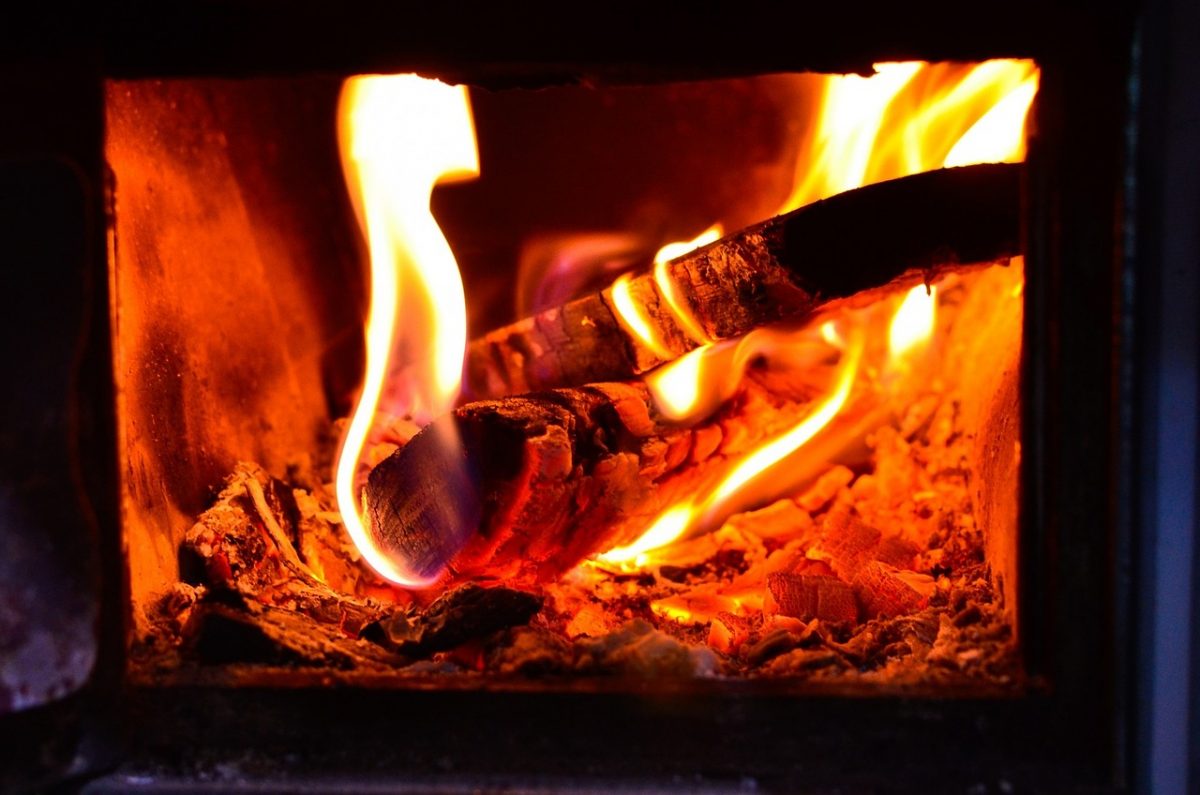
Campaign launched to raise awareness on the negative impact of woodburning stoves

Global Action Plan, which organises the annual Clean Air Day, and Impact on Urban Health, have launched a new information page to raise awareness of the negative environmental impacts of wood burners.  

Wood burners are known to emit PM2.5 which can cause illnesses such as asthma, coronary heart disease and lung cancer and even homes with ‘eco’ burners are three times more polluted than those without.  

However, woodburning stoves remain popular, with a 60% rise, compared with the same time last year, in sales of firewood reported in September by The Independent, suggesting that people may be unaware of the health impacts.  

However, although the increase in demand for firewood is understandable, the impact on local and national air quality cause by a sudden spike in the use of wood burners could be significant. Stoves that use solid fuels are known to emit high levels of PM2.5, with one study in London suggesting between 23 and 31% of this particulate matter pollution in the capital resulted from wood burning, despite most of the city – and large swathes of the UK – being classed as Smoke Controlled Areas since 1956.

Rachel Pidgeon, Portfolio Manager at Impact on Urban Health, said: ‘Air pollution has devastating effects on people’s health and disproportionately affects some of the most vulnerable people in our communities, including children. Wood burning is a major source of fine particulate matter, which is one of the most harmful pollutants, yet people’s awareness of this impact is low. This is a significant barrier to reducing it. 

‘Educating people about the link between wood burning, pollution and health without judgement is an essential step towards behaviour change and ultimately regulation as well as support to transition to other energy sources for those who need it.’  

Hospitality sector urged to ditch disposables after pilot shows big impact of small changes

Zero Waste Scotland is calling on hospitality businesses to take steps to slash single-use waste, after a pilot scheme saw a huge fall in the use of common disposable items.

The organisation’s Ditching Disposables initiative, which launched in 2021, saw a number of methods aimed at reducing the use of disposables trialled across multiple businesses.

Zero Waste Scotland targeted its scheme at businesses based in Portobello and Joppa.

After a 12-month period the pilot identified six steps businesses can take to slash single-use waste. These include switching sauce sachets for refillable bottles; charging for single-use cups and offering a reusable alternative; and making straws available on request only.

Other measures include putting napkins on tables rather than elsewhere; offering reusable takeaway containers for a deposit; and only making stirrers available on request.

Businesses that took part in the trial include Civerinos, The Cake and Candy Tearoom, Malvarosa, and ShrimpWreck.

Over the course of 2021, Civerinos and The Cake and Candy Tearoom cut sauce sachet use by 99%, while ShrimpWreck and Malvarosa reduced napkin use by 64%.

Overall, the pilot led to a monthly saving of 266kg C02eq and 16,273 single-use items, as well as saving the businesses money over the long term.

A Zero Waste Scotland spokesperson said:

“The Ditching Disposables scheme has been a huge success, proving that with a few simple changes, hospitality businesses can have a dramatic effect on reducing their single-use waste.

“We know that two massive barriers these businesses face when adopting more sustainable practices are time and money. But this scheme demonstrates that time invested in implementing these small changes can have a substantial positive effect on the environment and business’ finances and the majority of them are incredibly quick and easy to implement.

“As Scotland continues to move away from a throwaway culture to a more circular economy, initiatives like our Ditching Disposables study are vital in showing solutions are available and can be implemented successfully.”

Circular Economy Minister Lorna Slater said:

“We are committed to reducing waste across Scotland’s economy and these results show that small changes can go a long way in doing that.

“Last year, Scotland became the first country in the UK to ban many of the most problematic single-use plastic items. The best alternative to single-use plastic is always reusable items and I hope the findings of this pilot will encourage businesses to ditch disposables wherever possible.

“To help accelerate progress, we will be introducing mandatory charges for singleuse coffee cups and are bringing forward an ambitious Bill that will support Scotland’s transition to a circular economy and increase reuse and recycling rates.”

Scotland banned the manufacture and supply of some of the most problematic plastic (including compostable plastic) single-use items on June 1 2022.

The Ditching Disposables study was intended to demonstrate steps the hospitality sector can take as it shifts away from single-use items, regardless of what they are made from, to reusable options.

For more information on how to ditch disposables, visit the wasteless.scot website. To download the full Ditching Disposables report, visit our webpage here.

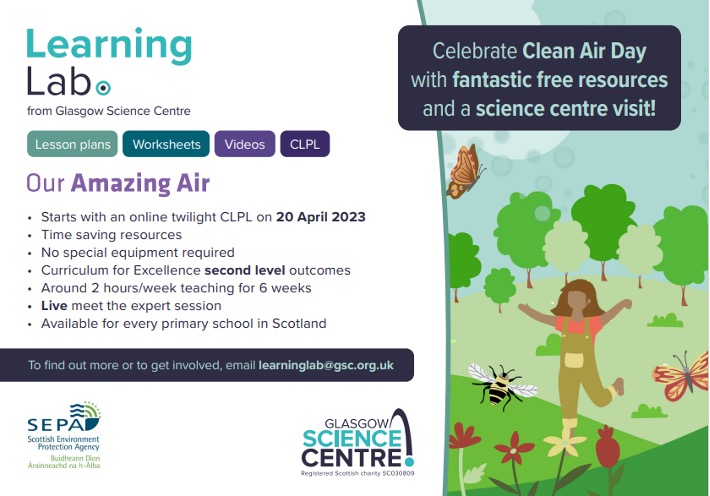
Glasgow Science Centre – Our Amazing Air Learning Lab (2023 Session)

Glasgow Science Centre will be running the latest session of the Learning Lab “Our Amazing Air” starting in April 2023. Learning Lab is an online STEM learning programme for the classroom and home which aims to inspire and empower learners through relevant, varied learning experiences that take place over several weeks. Each unique programme comprises lesson plans, video content and interactions with experts as well as professional learning for teachers and family support.

The Our Amazing Air programme has been updated for 2023 and is intended to deliver a learning programme for P5 – P7 pupils supporting learners to investigate what air is and why it is so important for us, what air pollution is and how we monitor it, how air quality can be improved and some of the steps we all can take to have a positive impact on air quality and the environment.

The programme includes a variety of materials and support for teachers including an online teacher training session on 20 April 2023, classroom activities, and teaching materials delivered over a dedicated six week learning block of two hourly sessions per week, complementing the Curriculum for Excellence (CfE) outcomes. The pupils also get the opportunity for a live meet the expert Q & A session and a visit to the Science Centre. The programme is available for every primary school in Scotland. The teaching session also culminates with resources and events to coincide with Clean Air Day, scheduled for 15th June.

For more information on the teaching programme, its content and how to register for a place, e-mail:learninglab@gsc.org.uk or visit: Take Part in Learning Lab | Glasgow Science Centre