Call for more detailed sampling and mapping of Scotland’s ticks

A doctor from Fort William has called for the mapping of tick-borne diseases in Scotland after encephalitis carried by the parasitic creature was confirmed in the UK. 

The spider-like creature can spread both viral and bacterial infections to humans through their bite. 

Dr James Douglas who also works in Lyme disease research issued the call to the BBC.  He believes ticks in particular areas to be regularly sampled to create a resource similar to how hazards are tracked by the Scottish Avalanche Information Service.

The call comes after tick-borne encephalitis was confirmed in the UK with another probable case in Scotland.

Sampling of ticks has been carried out before, but the GP said the testing was sporadic.

He said: “Longer term we need systematic analysis a bit like the avalanche service in winter time,” he said.

“We need a similar sort of service that’s sampling the ticks all the time in particular areas so we know what germs are in the ticks and how we deal with them.”

Ticks are usually active from early spring to late autumn, but there have been warnings they have become a year-round risk.

Dr Douglas said people should familiarise themselves with how to safely remove ticks. Public Health Scotland is among organisations offering information on dealing with tick removal and health concerns.

The GP said gardeners, dog walkers and forestry workers were among those most likely to encounter ticks, and urged them to regularly check themselves for ticks.

FSA launches meat fraud investigation

The Food Standards Agency (FSA) has launched a criminal investigation into potential food fraud following recent reporting in the media.

The FSA was alerted about food fraud allegations linked to cooked beef products from a single supplier in August 2021 and began seizing evidence shortly afterwards. Products from the affected retailer were removed from shelves immediately. We gave advice to industry in December 2021 and May 2022 to do extra due diligence on cooked meat supply chains.

In March this year, the FSA received additional intelligence about suspected wider fraud, and possible hygiene issues relating to the same supplier. This led FSA to execute a warrant at a premises, with the assistance of police and local trading standards and environmental health officers. More evidence was seized and three people arrested.

The additional allegations in March were made about the safety of meat as well as fraud. The respective local authority has since withdrawn approval for the business. Those businesses referred to in the new allegations have been advised of these concerns. They have begun specific sampling relating to these allegations and ended their relationship with the suspect supplier. Food production using meat from this supplier has been stopped in order to ensure that their food is safe.

Based on the investigation to date, the FSA and the relevant local authority for the implicated business have no indication that there is unsafe food on the market, or that there is a current increased risk to consumers.

Emily Miles, Chief Executive of the Food Standards Agency said:   
  
“We are continuing our criminal investigation into how a meat supplier allegedly provided products labelled as British when they were in fact sourced from other countries.   
 
This is a live investigation which means we are looking into all new lines of inquiry with the relevant local authorities, including investigating potential food hygiene breaches. This is alongside the work we are doing to investigate food fraud. 
 
Based on the investigation to date, there is no indication that food is unsafe or there is an increased risk to consumers. 
 
Criminal investigations take time and need to be done with due process and fairness. The FSA will work tirelessly on behalf of consumers to ensure that this criminal investigation is done to the highest possible standards. 
 
I do want to emphasise at a time when cost pressures and other challenges mean the risks of food fraud might be increasing, it is vital everyone involved in the food chain works to ensure that food is safe and what it says it is.” 

Long Covid eLearning

MySelf-Management and Covid Aid are combining their expertise around Self-Management and Long Covid to provide a high-quality self management programme and an annual package of online community support for those with Long Covid – providing a comprehensive and tailored solution for those in Scotland experiencing long-term symptoms as a result of Covid-19.

The free self management eLearning is open to people who have had Covid and are still experiencing long covid symptoms until the end of April.

More information can be found at Home | Myself Management (myself-management.org)

Update made to Local air quality management guidance

Revised local air quality management policy guidance has been published.

The guidance has been updated for local authorities to take account of Environmental Standards Scotland’s (ESS) recommendations to strengthen the local air quality management regime.

The policy guidance, the accompanying technical guidance and Cleaner Air for Scotland 2 – Towards a Better Place for Everyone’ (CAFS2) are the primary guidance documents to which local authorities should have regard when carrying out their air quality review and assessment work.

CAFS2 was published in July 2021, setting out the air quality policy framework to 2026. Amongst the wide range of actions included in the strategy is a commitment to review the LAQM policy guidance to take account of developments since the last update in 2016.

In November 2021 ESS announced its first investigation would consider air quality, specifically focusing on compliance with the nitrogen dioxide limit value set in Directive 2008/50/EC on ambient air quality and cleaner air for Europe, which forms part of retained law following the UK’s exit from the European Union. 

Three of the six recommendations made by ESS following their investigation are to strengthen the effectiveness of the LAQM regime in place to improve air quality in Scotland. The revisions made to this LAQMpolicy guidance incorporate the ESS recommendations to strengthen the LAQM regime.

A short life working group with members including local authorities and SEPA was established to support Scottish Government in reviewing the LAQM policy guidance.

The revised guidance can be found at Local air quality management: policy guidance – gov.scot (www.gov.scot).

The Scottish Government’s response to Environmental Standards Scotland’s recommendations following its investigation into air quality was also published and can be viewed at Environmental Standards Scotland air quality investigation – Scottish Government improvement plan – gov.scot (www.gov.scot).  

REHIS March News

Annual Environmental Health Forum

The Institute is delighted to announce that we have a great line up of speakers at our Annual Environmental Health Forum which is taking place as a Hybrid event from Kilmardinny House, Bearsden, Glasgow on Tuesday 25 April 2023. The programme has now been added to the website and speakers include Professor George Morris and Professor Phil Mackie, plus many more!  

The full programme and booking form can be found here.
 
Professional Courses

The Institute is busy organising the professional courses for the year, the details of which will all appear on the website, under Professional Development and Events. Dates for your diary so far include:Pollution Update 24 May 2023Food Update 7 June 2023Specialist Investigator’s Course’ (new course presenter) 28 August – 1 September 2023Health and Safety Update 6 September 2023Environmental Health Update 17 November 2023Environmental Public Health and Housing Update 6 December 2023Learning Resources

Members may have noticed a new ‘box’ in the members only section of the website, called ‘Learning Resources’. There are some links to places where additional learning/development can be achieved and additions will be made in due course.
 
CPD

Thank you to all submitting CPD. Submissions for 2022 have been received with some subject to final administration. The list of EHOs holding Chartered EHO status will appear in a Journal later in the year. We would encourage use of the online system for the recording of CPD, within the members only section of the website, and remind you that entries can be made ‘as you go’ throughout the year, so would take minimal time to ‘submit’ at the end of the calendar year.  We would also remind Chartered EHOs that you can request to be placed on a list maintained by the Institute of professionals offering private work, which would be provided, should anyone approach the Institute for such names.
 
Professional Examinations

Preparations are underway for the professional examination diets on May 10 2023, which is for SFSORB candidates only, and 26 – 28 September for those sitting the REHIS Diploma in Environmental Health and SFSORB qualifications. Should candidates, training organisations or professional practice advisors have any queries please email contact@
 
Community Training

Following a very successful Food and Health Presenters update on Wednesday 22 March, information on the new REHIS Elementary Nutrition course and REHIS Food and Health by elearning is available from the Director of Training.  Please email contact@
 

Gene-edited food now legal to be sold in England

Gene-edited food can now be developed commercially in England following a change in the law. 

The Genetic Technology (Precision Breeding) Act passed into law on 23 March 2023.

The Genetic Technology (Precision Breeding) Act covers precision-bred plants and animals developed through techniques such as gene editing. This is different to genetic modification (GM), which produces crops containing genetic changes that could not have occurred through traditional breeding or occur naturally.

The Scottish, Welsh and Northern Irish governments have not permitted the commercial use of gene editing.

Gene editing in England had been covered under the same regulation that has restricted the commercial development of GM crops under EU law. Brexit has enabled the Westminster government to relax the rules for the newer technology. 

The chief scientific advisor for the Department for Environment, Food and Rural Affairs (Defra), Prof Gideon Henderson, says that the new rules will lead to better food production and bring jobs and investment to England.

The Precision Breeding Act allows genetic changes that could also have been produced naturally or through traditional crossbreeding programmes. GM will not be permitted which involves the introduction of genes from other species.

Gene editing enables researchers to make precise genetic changes to a plant’s DNA, for example adding a gene to boost its growth or reduce dependence on fertiliser. The same change could be produced by crossbreeding different varieties, but it would take much longer. 

The new law allows for the use of gene editing and other methods that may arise in the future, provided the end result is a crop that is no different to a variety that could have been naturally produced.

Highland hotel guest died after being trapped by bench

A guest at a Highland hotel died after a heavy metal bench he was sitting on toppled backwards and trapped him against a wall, a court has heard.

Patrick McGuire, 67, from Wisconsin in the US, was knocked unconscious at the Glengarry Castle Hotel, near Invergarry, in April 2019.

Inverness Sheriff Court heard the cause of his death was asphyxiation.

The hotel’s owners have been fined £14,000 after admitting a health and safety breach.

Sheriff Gary Aitken told the court: “No-one goes on holiday expecting not to come back. 

“There can be fewer low risk activities than sitting outside on a garden bench, taking a photograph and having a cigarette.”

On Tuesday , the court heard the hotel’s owners – Robert and Donald MacCallum and late partner, Janette MacCallum – had recognised the risk of benches sinking into grass and becoming unstable.

It also heard they failed to put in place suitable inspections and maintenance.

Sheriff Aitken was told Mr McGuire had gone outside the hotel at about 22:30 and sat back on the bench. The seat tipped backwards causing him to hit his head on the wall.

Mr McGuire was trapped between the 72kg bench and the wall, causing positional asphyxiation.

The hoteliers were facing a £21,000 fine, but it was reduced because they accepted full responsibility at the earliest stage.

Sheriff Aitken said: “It is a tragedy that this event occurred and in no sense is the penalty a reflection on the value of Mr McGuire’s life. 

“No-one can put a value on human life.”

Fiscal depute Roderick Urquhart told the court Mr McGuire went outside to take photographs and have a cigarette and never returned to his room.

Mr Urquhart said: “His wife retired to bed waking at approximately 00.30 noticing that her husband had not returned. She tried unsuccessfully to call him and then set about searching the hotel for him.

“She searched the building and then extended her search to the hotel grounds. She found him lying on his back with his head touching a nearby wall, in a seated position on a bench.”

Emergency services were called and the incident was later investigated by Environmental Health at Highland Council, Health and Safety Executive and police.

Defence solicitor Jaimie McGready told the court the hotel had previously identified a sinking risk to the cast iron benches and had embedded wooden blocks in the grass to try and stabilise them.

A risk assessment of the hotel and its grounds was also carried out by their insurers and the risk was not identified. 

He said: “The risk was not an obvious one, even to the experienced risk assessors. The hotel has now introduced increased staff training and are ensuring no guests are outdoors when the doors are locked.”

Mr McGready said the benches had been replaced with wooden ones placed on concrete slabs and maintenance records were being kept. 

He said: “This incident was an isolated one, devastating and a great shock for the family. The circumstances here are unusual and extremely rare.”

ASH Scotland concerned about latest findings suggesting huge increase in teenage vaping

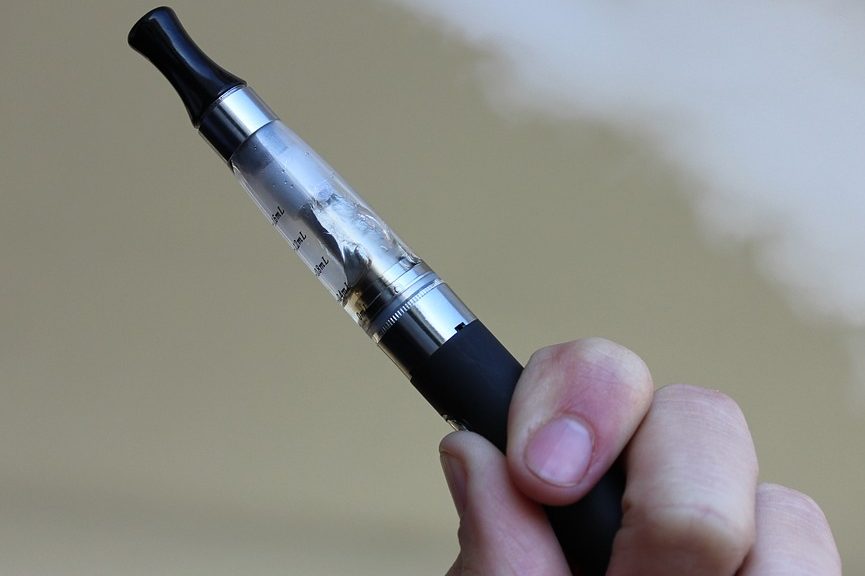
ASH Scotland is deeply concerned at latest figures suggesting that regular e-cigarette use by 15-year-olds has tripled and more than doubled for 13-year-olds in the last five years.

The Scottish Government’s Health and Wellbeing Census 2021-22 found that 10.1% of S4 students and 4.3% of S2 students report using e-cigarettes regularly (once a week or more). Figures from the Scottish Schools Adolescent Lifestyle and Substance Use Survey (SALSUS) in 2018 showed regular vaping by 13-year-olds and 15-year-olds at 2% and 3% respectively. 

The Health and Wellbeing Census, which surveyed 25,380 S2 and S4 pupils, also revealed that young people living in the most deprived areas of Scotland are more likely to regularly vape (7.8%) than those in the most affluent areas (4.6%).

Sheila Duffy, Chief Executive of ASH Scotland said: “Children using e-cigarettes is a major worry as most vaping products include nicotine, which is highly addictive, and toxic e-liquids that have not been safety tested for inhalation, and could risk damage to their growing lungs over time.

“Young people who experiment with e-cigarettes are three times as likely to start cigarette smoking than those who do not, and this is a prospect we should all want our children to avoid.

“Promoting novel products such as recreational e-cigarettes is one way in which the tobacco industry is reaching out to future generations of potential consumers and it is an issue that needs to be tackled by the Scottish Government as a matter of urgency.

“With the Scottish Government having published an analysis of responses to its consultation on tightening the rules on advertising and promoting vaping products in September 2022, swift action is now required to introduce measures – enabled by the Health (Tobacco, Nicotine etc. and Care) (Scotland) Act 2016 – to protect the long-term health of Scotland’s young people and future generations. 

“We are, therefore, calling on the Public Health Minister to lay robust regulations for parliamentary approval without further delay.”

Company director and employee sentenced for fly tipping

Image: Crown Office

The director of a ‘Man with a Van’ business and his employee have been sentenced for dumping household waste in Glasgow.

53-year-old Stuart Allison, from Bearsden, was fined £750 and ordered to pay compensation of £1,900 to Glasgow City Council for the clean-up.

His employee Steven Hutton, aged 44, from Coatbridge was fined £750. Both had previously pled guilty to an environmental breach.

The procurator fiscal depute told the court that between 10 June and 2 August 2020 there was large scale dumping of unauthorised waste at Dalsetter Crescent, Glasgow. Dalsetter Crescent is a dead-end street within a Drumchapel business development site.

Glasgow City Council Environmental Health Officers visited the site on 14 July 2020. They found a large quantity of tyres and household waste. They seized items of correspondence with names and addresses from the household waste.

Police attended at three of the addresses and spoke with the householders. These witnesses all said that they had hired a ‘Man with a Van’ via Facebook. They’d made payments to Stuart Allison’s bank account or paid Steven Hutton in cash to remove unwanted household items such as a sofa, bed, washing machine, dryer, television, dolls house and a hoover

CCTV from a nearby business showed two vans involved in the dumping of unauthorised household waste. Both vehicles were tracked back to Stuart Allison.

On the morning of 22 December 2020 police attended at the homes of Allison and Hutton with search warrants. They seized several electronic devices including iPhones and arrested both men.

During interview Allison confirmed he was the director of four businesses including a ‘Man with a Van’ business and that neither he or his companies held a waste management licence. He said he had several Facebook profiles which he used to advertise and contact prospective clients and that he was responsible for arranging Hutton’s work

While in custody Hutton confirmed that he had worked for his cousin Allison but had recently been sacked. He also stated to police that he ‘HAD DUMPED WASTE IN NEARLY EVERY STREET WITH A DEAD END IN GLASGOW’.

Analysis of the phones revealed numerous discussions on the uplift and disposal of household waste detailing enquiries, pricing, and the logistics of disposal of waste from individual jobs.

There were many references to rubbish being taken to the dump and ‘dump runs’ but some messages showed that Allison knew Hutton was on occasion fly tipping the waste rather than disposing of it lawfully.

Speaking after the sentencing, Fiona Caldwell, who leads on wildlife and environmental crime for the Crown Office and Procurator Fiscal Service (COPFS) said: 

“Fly tipping causes the public real and legitimate concern. It is criminal behaviour which creates an eyesore and is costly to clear up and one that the local council must often carry.

“The deliberate and criminal actions of Stuart Allison and Steven Hutton show a clear disregard for the environment and undermines legitimate waste management companies.

“There is no excuse for illegal dumping of waste and, as with this case, where there is sufficient evidence of a crime and if it is appropriate and in the public interest to do so, we will prosecute.”

The fiscal told the court that on the evening of Friday 24 July 2020 much of the waste at Dalsetter Crescent was consumed by fire. There is no suggestion that Allison or Hutton were involved in the fire.

After the fire the debris consisted of 51 tonnes of tyres and 17 tonnes of household waste. Glasgow City Council cleansing staff believed the volume of waste was significantly reduced by the fire.

The site clearance required 10 operators, a JCB shovel and operator and five artic lorries. The total cost of the operation to the public purse was estimated to be £10,000. Most of this estimated cost related to the removal and lawful disposal of tyres.

Allison and Hutton were not responsible for dumping the tyres. Another individual has previous been convicted and imprisoned in relation to dumping the tyres.

The cost for removal of the household waste was approximately £1,900.

Health inequalities statistics released

Scotland’s Chief Statistician today announced the publication of the latest Long-term Monitoring of Health Inequalities report. 

The report includes a range of indicators selected in order to monitor health inequalities over time. These indicators include: healthy life expectancy, premature mortality, all-cause mortality, baby birthweight and a range of morbidity and mortality indicators relating to alcohol, cancer, coronary heart disease and drug use. The relative index of inequality (RII) indicates the extent to which health outcomes are worse in the most deprived areas compared to the average throughout Scotland. Absolute inequalities are measured by looking at changes in the gap between those living in most and least deprived areas in Scotland. It is possible for absolute inequalities to improve, but relative inequalities to worsen.

The COVID-19 pandemic is likely to have had an impact on the most recent data for most indicators included in this report. Where there has been analysis undertaken to assess the impact of the pandemic that is relevant to a specific indicator the details have been included in the corresponding chapter.

Main findings

With the exception of the healthy birthweight indicator, significant health inequalities persist for each indicator covered in the report.

Healthy life expectancy (HLE)

The RII has increased to its highest level since the start of the time series for both males and females, increasing from 0.38 to 0.47 for males and from 0.36 to 0.45 for females between 2013-2015 and 2019-2021.

The absolute gap in HLE has also increased since the start of the time series for males and females. For males it has increased from 22.5 years in 2013-2015 to 25.8 years in 2019-2021. For females it has increased from 23.8 years in 2013-2015 to 25.7 years in 2019-2021, the largest gap in the time series.

Premature Mortality (aged under 75 years)

The RII has increased over the long term and is now at the highest point in the time series (1.56 in 2021 compared to 1.00 in 1997).

In 2021, the absolute gap in premature mortality rates increased to its highest point since 2003 (684.2 per 100,000 in 2021 and 703.5 per 100,000 in 2003), and is higher than at the start of the time series (648.7 per 100,000 in 1997).

First ever hospital admission for heart attack (aged under 75 years)

The RII for heart attack hospital admissions has fluctuated over time, ranging from 0.69-1.01. The RII for 2021 was the same as at the start of the time series in 1997 (0.82).

The absolute gap in heart attack hospital admissions has fluctuated over time. The gap increased from 63.2 per 100,000 in 2020, which was the lowest figure since 2008, to 79.7 per 100,000 in 2021. This increase has been driven by a 7% increase in admissions in the most deprived areas and a 10% decrease in the least deprived areas and reflects a return to pre-pandemic levels.

Coronary Heart Disease (CHD) deaths (aged 45-74 years)

The RII for CHD deaths has increased over the long term and is now at the highest point in the time series (1.75 in 2021).

The absolute gap in CHD deaths in 2021 was lower than at the start of the time series (222.6 per 100,000 in 2021 compared to 347.3 per 100,000 in 1997) but is the highest figure since 2009.

Cancer incidence (aged under 75 years)

The RII for cancer incidence has remained fairly stable over time, ranging from 0.29 to 0.42. In 2021, the RII was 0.42, the highest figure in the time series. 

The absolute gap in cancer incidence has fluctuated over time, ranging from 122.1 per 100,000 to 178.2 per 100,000, with no clear pattern.

Cancer deaths (aged 45-74 years)

The RII for cancer deaths has increased over time and the figure in 2021 (0.98) was the second highest recorded in the time series.

The absolute gap in cancer deaths has fluctuated over the time series, ranging from, 304.8 per 100,000 to 395.3 per 100,000, with no clear pattern.

Alcohol-related hospital admissions (aged under 75 years)

There has been a general downward trend in the RII for alcohol-related hospital admissions over time, and the figure in 2021 is lower than at the start of the time series (1.72 in 2021 compared to 1.96 in 1996).

The absolute gap in alcohol-related admissions has generally reduced over time, largely due to a reduction in admissions in the most deprived areas. It was widest at the start of the time series in 1996 (613.0 per 100,000) and reduced to its lowest level in 2020 (322.2 per 100,000) before increasing slightly to 336.5 per 100,000 in 2021.

Alcohol-specific deaths (aged 45-74 years)

The RII for alcohol-specific deaths has fluctuated over the time series and in 2021 was similar to the start of the time series (2.03 in 2021 compared to 2.02 in 1997).

While the absolute gap in alcohol-specific deaths has decreased overall, from a peak of 184.7 per 100,000 in 2002, it increased from the lowest point in the time series of 71.8 per 100,000 in 2020 to 94.0 per 100,000 in 2021, the highest rate since 2017.

All-cause mortality (aged 15-44 years)

There has been an overall increase in the RII over time for all-cause mortality, although it has fallen in the last couple of years from a high of 2.11 in 2019 to 1.98 in 2021.

The absolute gap for all-cause mortality has fluctuated over time, reducing to its lowest level in 2013 (159.6 per 100,000), and reaching its highest level in 2019 (257.9 per 100,000). It has since reduced to 218.9 per 100,000 in 2021.

Low birthweight

While the RII for low birthweight has decreased since the start of the time series (from 1.03 in 1998 to 0.97 in 2021) it has increased over the last two years and is currently higher than the lowest value in the time series (0.76 in 2013).

The absolute gap in low birthweight was 4.6 percentage points in 2021, an increase from 3.4 percentage points in 2020, but lower than at the start of the time series (5.3 percentage points).

Drug-related hospital admissions (aged under 75 years)

The RII for drug-related hospital admissions has fluctuated over time. It is currently higher than at the start of the time series (2.87 in 2021/22 compared to 2.77 in 1996/1997) but has decreased from a high of 3.05 in 1998/99.

The absolute gap for drug-related hospital admissions has increased overall since the start of the time series, reaching a high of 694.3 per 100,000 in 2019/20 and has fallen to 558.3 per 100,000 in 2021/22. This decrease may be due in part to hospital admission policies associated with the COVID-19 pandemic.

The full statistical publication is available at https://www.gov.scot/isbn/9781805254836
MUP reduces deaths and hospital admissions

Public Health Scotland (PHS) and The Lancet have published new evidence showing the impact of alcohol minimum unit pricing (MUP) on deaths and hospital admissions attributable to alcohol consumption.

The study estimated a 13.4% reduction in deaths, and a 4.1% reduction in hospital admissions, wholly attributable to alcohol consumption following the implementation of MUP. The study also found that MUP reduced deaths and hospital admissions where alcohol consumption may be one of a range of causative factors. The findings cover the period from MUP implementation up to the end of 2020.

This latest report builds on previous work that estimated alcohol sales reduced by 3% in the three years following the implementation of MUP.

Alison Douglas, chief executive of Alcohol Focus Scotland welcomed the news. She said, “The whole point of minimum unit pricing is to save and improve lives; this research shows it is doing just that. The reduction in deaths of more than 150 per year is great news and significantly higher than was hoped for based on the Sheffield University modelling.

“It shows the Scottish Government and Scottish Parliament were right to pursue this path-breaking policy in the face of fierce industry opposition. Today fewer families are grieving the heart-breaking loss of loved ones as a result.

“It is particularly heartening to see the positive impact is greatest for people living in our most deprived communities who for too long have suffered the most. Taking bold public health action has paid off and shown that population-level action can stem the tide of alcohol harm.

“The Scottish Government must now renew and uprate the minimum unit price. And it must act on alcohol marketing which also drives consumption and harm.”

Dr Grant Wyper, Public Health Intelligence Adviser at PHS, said: “Our study estimates that, following more than two and a half years of implementation, around 150 deaths, and around 400 hospital admissions, wholly attributable to alcohol consumption, were averted each year due to MUP. The greatest reductions were seen for chronic alcohol health harms, in particular alcoholic liver disease, which were slightly offset with less certain evidence of increases in acute alcohol health harms. The findings highlight that the largest reductions were found for males, and for those living in the 40% most deprived areas, groups which are known to experience disproportionally high levels of alcohol health harms in Scotland.

“We know that those living in the most socioeconomically deprived areas in Scotland experience alcohol-specific death rates more than five times higher compared to those living in the least deprived areas. The results published today are therefore very encouraging in addressing this inequality, and the overall scale of preventable harm which affects far too many people.”

Professor Daniel Mackay, Professor of Public Health Informatics at the School of Health and Wellbeing, University of Glasgow, said: “The methods we’ve used in this study allow us to be confident that the reduction in alcohol health harms we’ve shown is due to the introduction of MUP, rather than some other factor. This was important as the COVID-19 pandemic occurred towards the end of our study period and may have had an impact on alcohol-related health harms that was unrelated to MUP. Our main findings for the whole study period were consistent with findings from an additional analysis that focused on the pre-pandemic period only.

“In fact, we tested our main finding across a range of different scenarios and found the results to be largely consistent with our main finding, strengthening our conclusion that MUP has been effective at reducing the harm to health caused by alcohol.”

The MUP Evaluation Portfolio comprises of a number of research studies that are being undertaken to assess the impact of MUP across a range of outcomes, all of which have now been concluded. A report bringing together all the evaluation findings will be published in June 2023.

Read the PHS report

Read the PHS briefing

Read the study published in the Lancet

Drinks producers urged to register for deposit return scheme

Drinks producers are being encouraged to register for Scotland’s deposit return scheme, which will go live on 16 August 2023.

Drinks producers are asked to register with the scheme administrator, Circularity Scotland, in order to participate in the recycling scheme and to help ensure that they meet their regulatory requirements.

Circularity Scotland confirmed that by midnight on 28 February, producers responsible for more than 2 billion recyclable drinks containers had registered for the scheme, representing more than 95% of the total volume of products sold in Scotland each year.

Products from a range of sectors including global soft drinks, craft brewers, wine importers and distilleries have been registered with the scheme. By 28 February, 26,000 products had been registered, illustrating the scale of the scheme and the choice that will exist for consumers.

Registration for Return Point Operators (RPOs) is also open.

An RPO is anyone who provides a service for the collection of recyclable PET plastic, metal and glass containers included in Scotland’s scheme and refunds consumers’ deposits.

This service can range from accepting returns over the counter and refunding consumers’ deposits from the till, to operating a Reverse Vending Machine which will automatically accept containers and refund deposits as vouchers.

Most retailers and hospitality businesses that sell drinks to take away are legally required to operate a return point. However, they can apply for an exemption based on proximity to other return points or environmental health reasons. This is being managed by Zero Waste Scotland.

The scheme is expected to cut littering by a third, reducing the amount spent by local authorities on litter clean up, and will increase recycling rates of single-use drinks containers from the current rate of approximately 50% towards 90%.

The First Minister has also written to the UK Prime Minister, reiterating that the UK Government must exclude the deposit return scheme regulations from the Internal Market Act. 

A formal process has been agreed between the UK Government and devolved governments to allow for certain policies to be excluded from the effects of UK Internal Market Act where relevant regulations differ between UK nations and agreement has been reached to manage divergent policy. This has already been used successfully to exclude Scotland’s ban on certain single-use plastic items to ensure the ban was effective.

The Scottish Government first requested an exclusion for DRS as part of the single use plastic exclusion in July 2021. The UK Government only agreed to grant a narrower exclusion, covering the single use plastic regulations only. A further request, for a specific DRS exclusion, commenced in autumn 2022.