Food Standards Scotland – New Healthier Catering Guides

FSS have published a series of seven sector specific Healthier catering | Food Standards Scotland guides to support food businesses to make small, simple changes to the food and drinks they serve to make it healthier. There is also a guide specifically for improving children’s menus.

The aim is to help OOH businesses take steps to buy, prepare, promote and serve healthier food as part of their reopening and recovery. When made on scale, these steps could make a positive contribution to the diet of the nation.

The guides provide advice on general healthier catering and children’s menus, as well as sector-specific tips for Chinese restaurants and takeaways, chip shops, Indian restaurants and takeaways, Italian restaurants, pizza shops, and sandwich shops.

The guides also promote the use of MenuCal | Food Standards Scotland the freely available tool that enables businesses to calculate the calories in their food offerings for menu labelling purposes and helps them manage their legislative requirements for allergens.

Scottish Government launches climate campaign

Ahead of the COP26 summit in Glasgow later this year, the Scottish Government has announced a television, radio and digital campaign to encourage people across Scotland to come together to help tackle the climate emergency.

The Let’s Do Net Zero campaign highlights the benefits a net zero society would bring to the economy, health and environment. The campaign also aims to raise greater awareness of the twin crises of climate change and biodiversity loss, and the transformation required across all corners of the economy and society, in order to reduce Scotland’s contribution to climate change.

The domestic campaign will provide information and resources to help support the choices and decisions people can take to help reduce emissions, whilst improving health and wellbeing, while highlighting the achievements of communities, businesses and organisations who have already taken action to reduce emissions and introduce more environmentally sustainable practices. The international campaign will demonstrate the action that Scotland is taking to protect the planet, inviting global collaboration ahead of COP26.

Figures show that at least three quarters of the Scottish public agree that action on climate change must be taken now, while under a quarter consider themselves knowledgeable about the consequences of failing to act.

Scotland is already committed to reaching net-zero greenhouse gas emissions by 2045 and record capital investment of £1.9 billion will be spent on low-carbon projects in 2021/22 to tackle climate change and create good green jobs.

Information on how to help Scotland reach net-zero is available at www.netzeronation.scot

Minimum Unit Price of alcohol has positive lasting impact

A study has found that, the introduction of minimum pricing of alcohol has had a lasting impact in Scotland and is starting to have an effect in Wales, a study has found.

The study led by Newcastle University and published in Lancet Public Health shows a Minimum Unit Price (MUP) policy for alcohol, introduced in Scotland in 2018, continues to have a positive impact on lowering drinking levels two years on. 

Scotland was the first in world to bring in MUP for alcohol in May 2018, currently fixed at 50p per unit, while Wales introduced the policy last March.

Alcohol purchases decreased by 7.7% in Scotland following the introduction of the MUP and, in both Scotland and Wales, households that tended to buy the most alcohol were those most likely to reduce their amount.

The study used data from Kantar WorldPanel’s household shopping panel, which provided detailed information on 1.24 million separate alcohol purchases between 2015 and 2018, and the first half of 2020.

The impact of introducing the MUP in Scotland was analysed using purchases in Northern England as a control, alongside the impact of introducing MUP in Wales with Western England as the control.

Professor Peter Anderson, from Newcastle University, who led the study, said: “The introduction of a MUP in Scotland has made a significant impact on reducing alcohol levels, with a sustained drop in overall units bought by some of the highest-consuming households two years on.

“We can now see that the introduction of a MUP in Wales at the beginning of March 2020 has had a similar impact to the one we saw in Scotland in 2018 and we hope to see a continued benefit

“This is an important step forwards in addressing high levels of alcohol-related health problems and social harm that is caused by too much alcohol consumption.”

The team found that the highest purchasing households in Scotland and Wales that fell into the very lowest income bracket (the lowest fifth) did not seem to reduce the amount of alcohol they purchased, and so their expenditure on alcohol increased in line with the increase in price.

Lower purchasing households, including those with the very lowest incomes, did not increase their expenditure on alcohol, following the introduction of MUP.

Whilst household purchases of alcohol increased during covid-19 lockdowns, the level of impact of MUP between Scotland compared to Northern England, and Wales compared to Western England remained the same.

Alison Douglas, chief executive of Alcohol Focus Scotland, described the research as “hugely encouraging”.

She said: “Not only is MUP continuing to have the intended effect in reducing overall alcohol consumption in Scotland, it is those that tended to buy the most alcohol who are most likely to reduce the amount they purchase … We are seeing early signs that this reduction in consumption may be beginning to translate into wider improvements in health, with a reduction of 10% in alcohol-specific deaths in the first year of MUP.”


Soft Play Coronavirus Guidance updated

The Scottish Government has updated their Coronavirus (COVID-19): guidance for the soft play sector.  The guidance is for soft play centres to help the sector prepare for re-opening (at level 0 or 1).

This guidance has been developed in collaboration with industry, trade unions, regulators including Local Authority Environmental Health Officer, and others. 

The update includes a number of changes across the publication including new operational checklist.

Up to £10,000 cashback grant for installing heat pumps

The Scottish Government is offering 75% cashback grants along with an interest-free loan for businesses wanting to install heat pumps.

Organisations can access the loan and receive a cashback grant of up to £10,000 while also cutting their energy bill and carbon footprint.

The SME Loan Scheme has already provided Scottish businesses with more than £26 million in loans for more than 1,000 energy saving projects.

For full details, and to take advantage while funds last, call Zero Waste Scotland’s Energy Efficiency Business Support team on 0808 808 2268 or visit the website.

World No Tobacco Day 2021

Today on May 31, the World Health Organisation celebrates World No Tobacco Day and their theme this year is #CommitToQuit.

Although many smokers are keen to kick tobacco and nicotine addiction, many don’t have adequate means or support to do so. Without assistance, only 4–7% of those who attempt to quit succeed in doing so. Structured, well-funded and accessible cessation programmes are therefore an important component of World No Tobacco Day’s celebration of “Commit to Quit”.

The scale of the tobacco epidemic is colossal, posing one of the biggest threats to global health ever faced and killing over 8 million people every year. The dangers extend beyond the physical health of individuals – also impacting social and economic well-being with the annual cost of smoking estimated to be $1.4 trillion worldwide.

There are around 887,000 smokers in Scotland. 10,000 people die from smoking related illness each year, according to the Scottish Public Health Observatory (ScotPHO). Around 350,000 people would either quit or not take up smoking were the smoking rate to fall from 20% to 12% by 2021.

NHS Scotland will save between £104 million and £168 million per year thanks to an 8% drop in smoking, according to ScotPHO. As we have previously shown, individual smokers will save around £1,500 per year by quitting.

Three million people in Scotland receive first vaccination

The vaccination programme has delivered first doses of the coronavirus (COVID-19) vaccine to more than three million people in Scotland – 66.6% of the adult population. The landmark was reached on 14 May 2021.

The national vaccination programme is now moving through those aged 40 – 49 years old and more than 50% of this age group have come forward to receive their first vaccination.

As the programme progresses through this group, appointments are being scheduled for those aged 30-39 years old. In line with the latest advice from the Joint Committee on Vaccination and Immunisation (JCVI) people in this age group will be offered an alternative to the Oxford/AstraZeneca vaccine when it is appropriate to do so.

Meanwhile 1,599,519 of the population have received their second dose which offers greater and longer lasting protection against the virus.

Chief Medical Officer Dr Gregor Smith said;

“It is down to the enormous efforts of our vaccination teams around the country that more than three million people in Scotland – two thirds of the adult population – have received their first dose and I would like to say a huge thank you to them and all those who have taken up their offer of a vaccine.

“The vaccination programme is one of the main ways – along with restrictions and testing – that we are working to beat this virus and so it is crucial that everyone attends for their appointments when they are offered. This is equally important for those receiving appointments for their second dose as these offer longer lasting protection against COVID-19.

“It is great news that more than half of 40-49 year olds have now come forward and had their vaccine. Everyone has a role to play in helping to bring this virus under control and we want to see our high uptake rates continuing through all the age groups. I would urge all 40-49-year-olds to take the chance of getting vaccinated when your chance comes.

“The latest advice from the JCVI regarding 30- 39 year olds is clear that it is based on the current low prevalence of the virus and the availability of alternatives to the Oxford/AstraZeneca vaccine. If the situation changes the advice is that vaccination of adults aged 30-39 years with any of the UK authorised vaccines is always better than no vaccination, except where there are specific medical reasons for not doing so.

“Supplies permitting, we still expect to offer a first dose to all adults in Scotland by the end of July.”

Calculating physical distancing capacity in public settings guidance published

The Scottish Government have produced guidance on how to work out the maximum number of people who can physically distance within a public setting including businesses, places of worship and public events.

All non-domestic premises are being asked to consider what their maximum physical distance based capacity (PDBC) limits are for their premises, take reasonable steps to manage the capacity to avoid breaching appropriate physical distancing rules and to display this maximum capacity at their entrance.

During their routine compliance checks on premises where there has been a reported concern, Officers from Environmental Health departments within Local Authorities will consider the distancing in place and capacity limits of the premises, including asking questions about how the capacity limits have been determined.  If Officers have any concerns they will support the premises to work out a safer maximum capacity.

New Environment Watchdog- Environmental Standards Scotland

Environmental Standards Scotland (ESS) is a new independent body set up to ensure the effectiveness of environmental law, and prevent enforcement gaps arising from the UK leaving the European Union.

ESS is currently operating on a non-statutory basis, but will gain the statutory powers set out in the UK Withdrawal from the European Union (Continuity) (Scotland) Act later in 2021.

Environmental Standards Scotland (ESS) governing Board consists of 5 members including a Chair. The Scottish Parliament approved ESS Board members in December 2020. The Board Members have significant experience in leading independent scrutiny organisations and particular expertise in European environmental law. The Board will be supported by an executive team led by a Chief Executive.

Their remit is to provide advice on the performance of the Scottish Government and relevant public authorities in complying with environmental law, as well as improving the effectiveness, implementation and application of environmental law in Scotland.


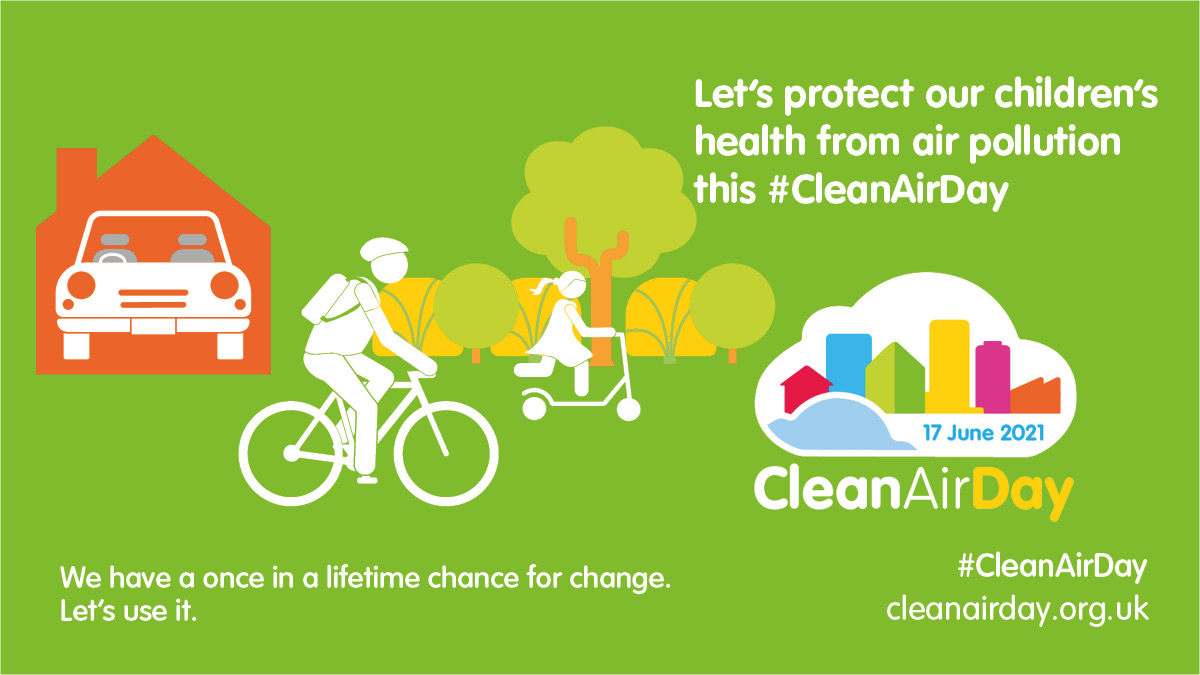
Countdown to Clean Air Day Scotland starts

Pupils from an Edinburgh school helped Clean Air Day Scotland celebrate its fifth birthday – with a call for motorists to leave the car at home when the campaign takes place on 17th June. 

Sciennes Primary School is one of 12 in the city to run a school street, where the route outside a school is shut to vehicles at certain times during the school day to encourage children to walk and cycle, improving their health and reducing exposure to air pollution from vehicles.

With one month to go until Clean Air Day Scotland, the Lord Provost of Edinburgh, Frank Ross, helped Sciennes primary six Junior Road Safety Officers  and a group of primary seven pupils launch the campaign in the Sciennes Road school street.

Pupils designed bunting which they hung on the school railings in the once congested road and signed pledges to walk and cycle and to encourage their families to ditch the car.

The charity Environmental Protection Scotland (EPS) is coordinating Clean Air Day in Scotland on behalf of the Scottish Government.

The pupils were presented with the first ever Clean Air Day colouring book a collaboration between EPS and art students across Scotland which has drawings for children to bring to life on an air pollution and environmental theme.

The campaign has established itself as Scotland’s main air quality campaign since the first National Clean Air Day took place in June 2017.

On 17 June, people are being encouraged to walk or cycle, rather than use the car, particularly on the school run or for other shorter trips to schools and supermarkets.

The campaign also encourages people to consider walking or cycling less polluted side streets after research found this could reduce a child exposure to air pollution by 30%. 

Clean Air Day campaigners also want people to consider the purchase of an Ultra-Low Emission Vehicle (ULEV) ahead of the ban on the sale of new petrol, diesel cars and vans from 2030.

The Lord Provost of Edinburgh, Frank Ross, a trustee of Environmental Protection Scotland, said: In Edinburgh we wholeheartedly support the Clean Air Day campaigns aims, and through initiatives like School Streets were helping our youngest generations to make journeys by healthy, active travel. Its wonderful to see some of our Junior Road Safety Officers join in to celebrate Clean Air Days fifth anniversary, and to spread the clean air message, which will be so important for years to come. This Clean Air Day were reaffirming our commitment to tackle air pollution, for the future of our city.

EPS have also announced that the Clean Air Day 2021 Scottish resources have gone live after head over to our Clean Air Day page to find out more.


Tourism and hospitality coronavirus sector guidance updated

The Scottish Government have made updates the Coronavirus (COVID-19): tourism and hospitality sector guidance to reflect changes in the guidance. 

The changes include:

World Food Safety Day

World Food Safety Day (WFSD) will be celebrated on 7 June 2021. The day aims to draw attention and inspire action to help prevent, detect and manage foodborne risks, contributing to food security, human health, economic prosperity, agriculture, market access, tourism and sustainable development.

This year’s theme, ‘Safe food today for a healthy tomorrow’, stresses that production and consumption of safe food has immediate and long-term benefits for people, the planet and the economy. Recognising the systemic connections between the health of people, animals, plants, the environment and the economy will help us meet the needs of the future.

Recognising the global burden of foodborne diseases, which affect individuals of all ages, in particular children under-5 and persons living in low-income countries, the United Nations General Assembly proclaimed in 2018 that every 7 June would be World Food Safety Day. In 2020, the World Health Assembly further adopted a decision on strengthening efforts on food safety to reduce the burden of foodborne disease. WHO and the Food and Agriculture Organization of the United Nations (FAO) jointly facilitate the observance of World Food Safety Day, in collaboration with Member States and other relevant organizations.

Food safety is a shared responsibility between governments, producers and consumers. Everyone has a role to play from farm to table to ensure the food we consume is safe and healthy.