Council Mini-Buses Converted to Mobile COVID Testing Units

Two Glasgow City Council mini-buses have been converted into mobile COVID testing units which will offer rapid tests to people without symptoms.

The buses have been commissioned by the council's COVID Response Team which is working in partnership with NHS Greater Glasgow and Clyde and the Scottish Government. City Building staff converted the buses in consultation with the council's Environmental Health and transport experts and the NHS.

The buses have been fitted with a solar panel to power on-board equipment. The testing booth is at the rear of the vehicle which has a ramp for wheelchair access. Test results are sent to people by text message and before leaving the bus, they are given a leaflet detailing the support on offer if they have to self-isolate.

Staffed by NHS nurses, the buses will provide a flexible testing option to complement existing COVID testing sites which already exist across the city. Emblazoned with the Test and Protect logo, the buses are an unmissable addition to the city's testing facilities.

Public health officials are asking people without symptoms to get tested, either at home or in the community, twice a week – to help reduce the spread of the virus in Scotland.

Changes to the Personal Protective Equipment at Work Regulations 1992

HSE is consulting on changes to the Personal Protective Equipment at Work Regulations 1992  (PPER) 1992. 

The aim of the consultation is to understand the impact on stakeholders and businesses of extending the scope of the employers’ duties under the PPER to workers and not only employees.

Why is the Health and Safety Executive (HSE) making changes to the regulations?

In November 2020, a judgment was handed down in the judicial review action in the High Court brought by the Independent Workers Union of Great Britain (IWGB) against the Secretaries of State for Department for Business, Energy and Industrial Strategy (BEIS) and the Department for Work and Pension (DWP), which decided that the government had failed to properly transpose Article 8(4) and 8(5) of EU Directive 89/391/EEC  (“the Framework Directive”) and Article 3 of EU Directive 89/656/EEC  of 30 November 1989 (“the Personal Protective Equipment Directive”) into UK law.

The Framework Directive sets out the minimum standards for health and safety through a series of general principles, and the Personal Protective Equipment Directive (“PPE Directive”) sets out the minimum health and safety requirements for the use of personal protective equipment in the workplace for workers.

The UK implemented the PPE Directive through the Personal Protective Equipment at Work Regulations 1992  (“PPER”) which places duties on employers to their ‘employees’ in regard to PPE. The High Court found that the PPE Directive required these duties to be extended to ‘limb (b) workers’ and not only ‘employees’. Therefore, HSE is making amendments to the PPER in order to align with the court’s judgment.

What does this mean?

Employers will have a duty to provide limb (b) workers with the same health and safety protections in respect of PPE as they do currently for employees.

Options on how to achieve the extension of the provisions to workers in the legislation will not be presented during the consultation as the key legislative changes are being made to align with the court decision.

The consultation can be accessed via HSE Consultation Hub from this date and is running until the 15 August 2021. For any enquiries, please contact ppeconsultation2021@hse.gov.uk


Circularity Scotland

Circularity Scotland now have responsibility of the development of the Scotland’s Deposit Return Scheme.

Circularity Scotland was appointed as the scheme administrator for the deposit return scheme in March 2021. They will take on the responsibility for operational aspects and day-to-day management of the scheme for producers who appoint them to act on their behalf.

They are now at the point in the set-up of the scheme where they want to communicate with as many of the producers and return point operators as possible, to share progress and more specific details of what you need to do to prepare.    

In order to receive updates on how Scotland’s Deposit Return Scheme is progressing please register with Circularity Scotland

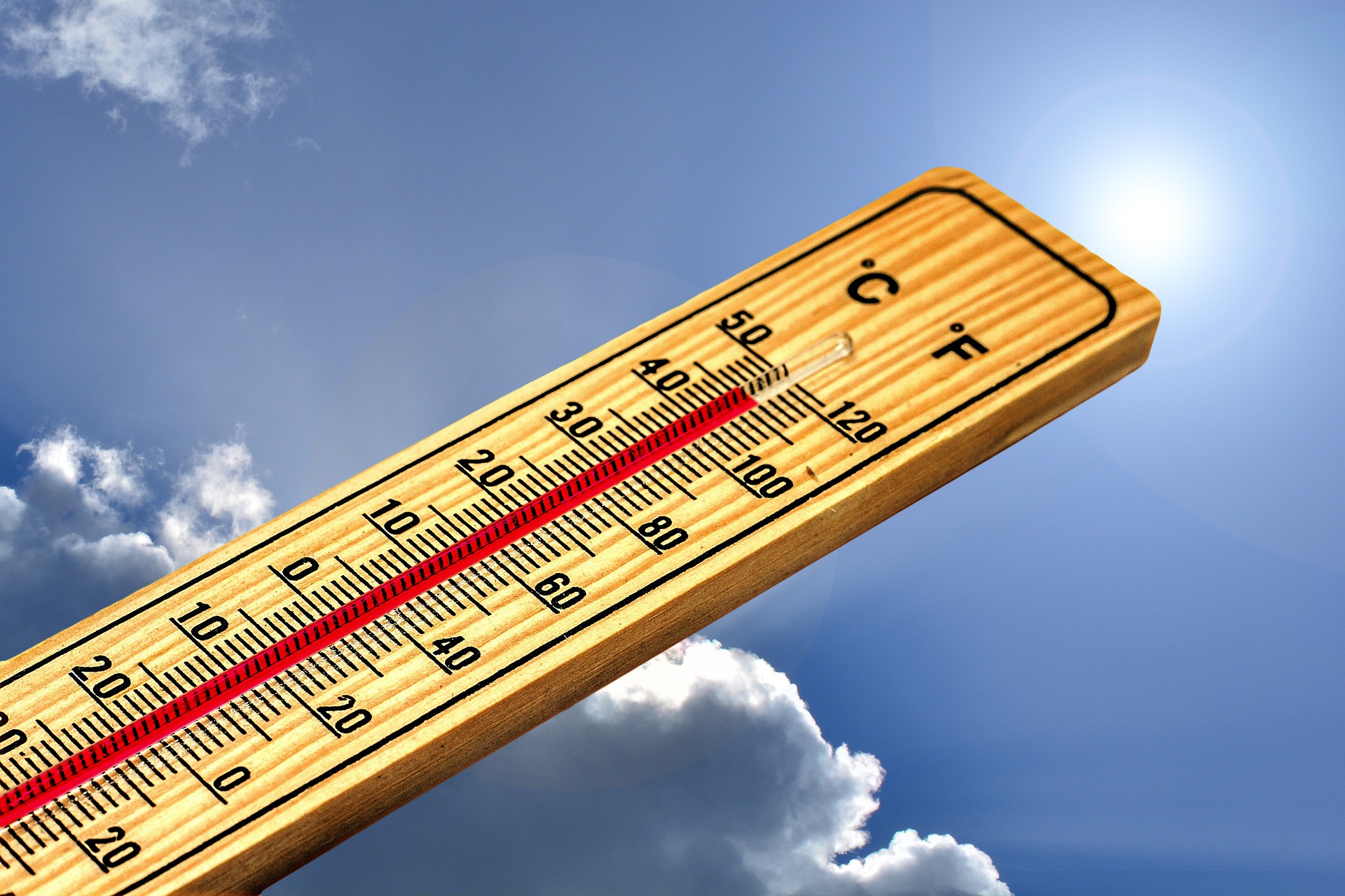
Advice on high temperatures in the workplace

With temperatures soaring in parts of Britain this week, make sure you have the right advice and guidance to work safely.

It is important to remember the risks of overheating when working in hot conditions.

There's no law for maximum working temperature, or when it's too hot to work. However, n offices or similar environments, the temperature in workplaces must be reasonable.

When assessing this we look at something called thermal comfort. There are six factors affecting thermal comfort and are both environmental and personal. These factors may be independent of each other, but together contribute to an employee's thermal comfort.

HSE has plenty of guidance on workplace temperature, including:

Clean Air Day 2021 declared a success

Clean Air Day 2021, coordinated by Environmental Protection Scotland (EPS) on behalf of the Scottish Government, has been declared the most successful campaign in its five-year history with 190 participating organisations and individuals, including 20 Scottish local authorities. EPS Policy and Communications Officer John Bynorth recaps on the activities that occurred across the Nation.

The Lord Provost of Edinburgh, Frank Ross, an EPS trustee, kicked off the campaign by meeting pupils from Sciennes Primary School, accompanied by teacher Gregor Hutchison and depute headteacher Lucy Gallagher at the launch event one month before the event took place on Thursday 17th June. 

The colourful photographs of the children with umbrellas and the new Clean Air Day colouring books in the ‘school street’ outside Sciennes Primary made headlines in The Times, the Scotsman, Edinburgh Evening News and was even picked up on an internet news website that covered the Ivory Coast!

Campaign interest snowballed from there, helped by the easing of COVID-19 restrictions as charities and NHS boards, government bodies, private sector organisations, bus companies, active travel organisations and electric vehicle and car clubs saw the benefits of making the case for behaviour change to improve air quality, and the additional benefits of contributing to Scotland’s longer-term environmental objectives in COP26 year.

The fantastic Clean Air Day colouring books went down a storm with schools. They were the idea of EPS external affairs and social media officer, Elina Dagdeleni, who brought together 11 students from three art schools across Scotland to create a book that primary and pre-school children could colour in. EPS boxed up and distributed books to schools which registered as participants.

The book’s beautiful designs conveyed messages about the harmful effects of vehicle engine idling and how active travel, electric vehicles and improving the environment create healthier and happier communities and really came to life once the teachers opened up the boxes and let their pupils loose on the books with colouring pencils.

They proved popular with pupils at dozens of schools in the Highlands, Aberdeen, Angus, Fife, Edinburgh, Glasgow, North and South Lanarkshire and Ayrshire and in Argyll and Bute which utilised them as part of school studies around air quality and the environment, and to encourage behaviour change in relation to vehicle use.

St Joseph’s Primary School in Glasgow held a clean air artwork event with pupils spurred on by the city council’s decision to project some of their artwork onto the sides of prominent city buildings, including the Royal Concert Hall, in the run up to Clean Air Day.

Ferryden Primary School in Montrose and two other Angus Council schools, which are currently piloting School Exclusion Zones (SEZ), took part in Clean Air Day activities to highlight the benefits of a congestion-cutting initiative which sees motorists who park in streets immediately outside the schools at pick up and drop off periods receive fixed penalty notices.

Ferryden’s Headteacher Michelle MacKay, who said her school is already benefiting from reduced car use around the school, and some pupils joined together to celebrate Clean Air Day in the school’s garden for a photo shoot which received coverage in The Courier and the Evening Telegraph newspapers.

Clean Air Day also welcomed the first Scottish island school to participate – thanks to headteacher Julie Wilson, the staff and pupils at Gigha Primary School, which lies off the Kintyre Peninsula in Argyll and Bute. The 14 pupils were treated to the colouring books after taking part in an outdoor air quality tree survey.

Ricardo’s senior consultant Susannah Telfer delivered an online presentation and the company provided air monitoring sensors to two schools in Glenrothes, Fife, Southwood Primary and Rimbleton House.  Eloise Griffin, technical officer at Fife Council environmental health, told the Dundee Courier that the council hoped children would ‘take what they learn home with them and that can encourage families to make changes.’

EPS also provided Clean Air Day drawstring bags to participants which proved popular at schools, such as St Marnock’s Primary in Glasgow where primary four pupils made an air quality video aimed at inspiring people to leave the car at home.

MSP Màiri McAllan, Minister for Environment, Biodiversity and Land Reform in the Scottish Government appeared in a Clean Air Day video in which she discussed the forthcoming Cleaner Air For Scotland (CAFS 2) strategy and the wider links between air quality, public health, active travel and climate change impacts – which can be viewed on the EPS You Tube channel here.

Despite air quality being vastly improved in comparison to 50 years ago, the minister said there were still some areas where standards for human and environmental health were not being met and that road transport in towns and cities was a major contributor to this issue.

She highlighted the impact of poor air quality, through nitrogen deposition, on biodiversity and said that while the first CAFS strategy had achieved a great deal, the subsequent independent review commissioned by the government had identified areas of additional action.

The minister said the new strategy would target transport emissions as part of a wider commitment to cut the number of miles driven on Scotland’s roads and domestic fuel burning and agriculture emissions sources.

She said a public engagement strategy was being planned about air quality that would link with organisations such as Cycling Scotland, Sustrans and Living Streets – which all supported Clean Air Day Scotland – to deliver active travel ‘co-benefits’ as part of the COVID-19 recovery strategy.

Ms McAllan added: “The linkages between air pollution, climate change, quality of the urban environment and mobility form a central thread through our new strategy.

“Good, joined up policy can deliver co-benefits for both air pollution and greenhouse gas reduction. This is a principle we will hold to as we work to end Scotland’s contribution to climate change by 2045, while at the same time, realising our aim that Scotland should have the cleanest air in Europe.”

She added that ‘significant challenges’ remained to further improve air quality in Scotland, but this was achievable through a continued collaborative approach by organisations and the involvement of individuals who can make ‘small changes’ to their daily lives.

“I am sure that the fifth Clean Air Day will be as enjoyable and successful as previous years.” She said the participation of so many people in the event showed ‘just how much we all care about building a clean air future.’

The video has been uploaded almost 100 times and was viewed by pupils at St Paul’s High School in Pollok, Glasgow, whose pupils made an impressive online video for Clean Air Day, took part in a traffic study outside the gates and learned about the impact of air quality from the nearby motorway on plants. 

Other secondary schools to involve children in air quality activities, including outdoor pollution studies and lichen samples, were Trinity High School in Renfrew, Renfrew High School and Caldervale High School in Airdrie.

Monica Lennon MSP, Scottish Labour’s spokesman for Energy, Net-Zero and Transport and Graham Simpson MSP, the Scottish Conservative Party’s Deputy Transport spokesman supported the campaign on social media which marked the cross-party support the campaign has achieved in its five years.

Midlothian SNP MP Owen Thompson and Green Party North East Fife MSP Maggie Chapman also got behind the campaign.

Local elected members showed ingenuity to convey the climate change message. 

Councillor Dougie Campbell, Dumfries and Galloway’s Environment Champion, explained in a social media video the actions people can take to improve air quality and what the local authority’s actions. This can be watched on Facebook here.

Public transport, which has faced a difficult time during the pandemic, showed overwhelming support for Clean Air Day with the bus industry throwing its weight behind the campaign.

First Bus had staff and drivers make pledges to improve air quality at their depot in Larbert, Stirling, and David Adam, First Aberdeen’s bus depot operations manager signed a pledge as he promoted the city’s hydrogen bus. 

The Love My Bus campaign published a blog article by EPS about the importance of new election and low emission or retro-fit buses to encouraging people back onto public transport and the success of Low Emission Zones.

Xplore Dundee and its parent company, McGills Buses, had an article published in the Dundee Courier about its latest ‘green’ fleets and the company provided a slide show about zero-emission bus fleets to schools in Inverclyde as parts of a schools programme with the local authority.

There was widespread support from other sectors, with local government ‘go to’ organisation Improvement Scotland (IS) posting pledge card images of staff on social media. Programme Manager Michael McLean made a pledge to give up vehicles to cut emissions.

Staff at the Healthy n’ happy Community Development Trust and Cam Glen bike hub signed pledge cards and posted them on a wall of their shop in Rutherglen, South Lanarkshire.

North Ayrshire Council encouraged staff and residents to ‘Travel Smart’ (the name of its active and sustainable travel initiative) and take part in a pledge card case study competition.

A total of 10 participants agreed to take part in activities to reduce pollution, contribute to the wider climate agenda and improve their health during the month of June. The difference with a one-off pledge was they had to explain whether they had kept them and send in images of their sustainable activities. One man in Largs pledged to grow his own vegetables, taking up cycling more often and make his own soup from home grown courgettes and lettuce!

Motorists using the Western Approach Road in Edinburgh were urged by a Clean Air Day billboard advert to leave the car at home. The event took place shortly after the City of Edinburgh Council published a consultation on its final proposals for the Low Emission Zone.

In an article outlining the proposals for the Edinburgh Reporter news website, Councillor Lesley Macinnes, the Transport and Environment Convener, said: “Every year, Clean Air Day gives us pause for thought. Is it acceptable that poor air quality affects the health and wellbeing of some of the most vulnerable members of society.”

EPS trustee Dr Iain McLellan, who recently bought a Nissan Leaf, posted a blog on his LinkedIn page in which he described candidly the differences in owning an EV compared to a traditional petrol or diesel vehicle. His conclusion: “I have done 1,220 miles since collecting the car and according to the Transport Scotland 'EV Life' app, I have saved £131, but more importantly 220kg of CO2 emissions and I have zero tailpipe emissions of particulate matter.” Read his blog here.

Electric Hawick, which supports EV owners in the Borders and car sharing club Co-Wheels promoted its rapidly growing fleet in Scotland on Twitter.

Cargo bike firm Farr Out Deliveries in Edinburgh posted messages on Instagram and the Loch Lomond and Trossachs National Park posted on Instagram a beautiful image of their electric boat. Car companies also became involved and a Mercedes-Benz dealership in Edinburgh  promoted its electric van fleet on Clean Air Day.

NHS Greater Glasgow and Clyde Grampian, Ayrshire and Arran and the Borders health board all tweeted or posted supportive messages and links about Clean Air Day and the importance of good air quality and active travel.

Other participants included Scottish Government’s new ‘Let’s Do Net Zero’ campaign, SEPA, Transport Scotland, Scottish Renewables, heath organisations ranging from the British Lung Foundation to the Asthma and Allergy Foundation to the Glasgow City Youth Health Service, the youth service Connect Alloa, local housing associations, Scotland’s United Nations University recognised Regional Centre of Expertise on Education for Sustainable Development, Dynamic Earth and the Plant Life Scotland, which produced an interesting report about the impact of air pollution on plant species.

The Getting Better Together (GBT) community-based health initiative in Shotts, North Lanarkshire, operates a cycle hub and breakfast club for pupils at Stane Primary School. Staff gave out Clean Air Day bags to local youngsters who cycled on the day and pupils who took part in a ‘walking bus’ to school received colouring books.

Clean Air Day’s UK organisers Global Action Plan produced a media story published on Clean Air Day. It revealed one-quarter of schools in England and Wales, from nurseries to sixth-form colleges, were in locations with high levels of small particle pollution. The article made front page headlines in The Guardian and appeared in The Herald. You can read the full story here.

With 190 participating organisations and individuals, including 20 Scottish local authorities, this year’s Clean Air Day Scotland campaign has been a major success.

So many schools, local authorities, health boards, charities and other organisations are given up their time to show support for the event or participate in learning activities for children around air quality that Clean Air Day can only become even stronger in Scotland. EPS thank everyone who made the 2021 campaign so successful. 

Clean Air Day Scotland supporters can find their logo on our website by clicking this link.
Food Standards Scotland has updated its COVID-19 Guidance for Food Business Operators and their Employees

Food Standards Scotland have updated its guidance for food business operators (FBOs) and their employees on 19 July.

A summary of the changes in the update are as follows:

  • Removal of FACTS 
  • Changing of physical distancing requirements in line with Scottish Government restrictions 
  • Deletions of outdated text and consolidation of repetition, with editing of headings for easier readability 

Scottish Government publishes new air quality strategy

The Scottish Government has published a new strategy, setting out Scotland’s air quality framework for the next five years. 

The new strategy titled Cleaner Air for Scotland 2 – Towards a Better Place for Everyone replaces Cleaner Air for Scotland – The Road to a Healthier Future. The strategy sets out a series of actions to deliver further air quality improvements, building largely on the work of a previous review, published in 2019.

The strategy is shaped around 10 general themes:

  1. Health – A Precautionary Approach. 
  2. Integrated Policy. 
  3. Placemaking. 
  4. Data. 
  5. Public Engagement and Behaviour Change. 
  6. Industrial Emissions Regulation. 
  7. Tackling Non-Transport Emissions Sources. 
  8. Transport. 
  9. Governance, Accountability and Delivery. 
  10. Further Progress Review. 

HSE releases annual workplace fatality figures for 2020/21

The provisional data released shows that a total of 142 workers were killed at work in Great Britain in 2020/21.

In statistical terms the number of fatalities has remained broadly level in recent years – the average annual number of workers killed at work over the five years 2016/17-2020/21 is 136.

The figures released by the Health and Safety Executive (HSE) relate to workplace incidents. They do not include deaths arising from occupational exposure to disease, including Covid-19. 

The three most common causes of fatal injuries continue to be workers falling from height (35), being struck by a moving vehicle (25) and being struck by a moving object (17), accounting for more than half of fatalities in 2020/21.

These figures also continue to highlight the risks to older workers with around 30 per cent of fatal injuries in 2020/21 involving workers aged 60 or over, even though such workers only make up around 11 per cent of the workforce.

In addition, members of the public continue to be killed in connection with work-related incidents. In 2020/21, 60 members of the public were killed as a result of a work-related incident.

The figures for Mesothelioma, which is a cancer contracted through past exposure to asbestos and is one of the few work-related diseases where deaths can be counted directly, show 2,369 people died in Great Britain in 2019. This is seven per cent lower than the average of 2,540 deaths over the previous seven years. 

Current mesothelioma deaths largely reflect occupational asbestos exposures that occurred before the 1980s. The figure for 2019 is consistent with projections that a reduction in total annual deaths would start to become apparent at this point. However, it is still not certain how quickly annual deaths will decline. 

A fuller assessment of work-related ill-health and injuries, drawing on HSE’s full range of data sources, will be provided as part of the annual Health and Safety Statistics release on 16 December 2021.

Launch of consultation on licensing order for short term lets

Consultation on the details of a licensing scheme for short term lets will take place over seven weeks this summer.

Social Justice Secretary Shona Robison has announced the publication of a draft licensing order for consultation, ahead of laying the final legislation at the Scottish Parliament in September.

The licensing scheme for short-term lets is to be established using powers under the Civic Government (Scotland) Act 1982, and to give local authorities the ability to introduce short-term let control areas under powers in the Planning (Scotland) Act 2019.

Stakeholders will now have until 13 August to comment on the licensing order and the draft business and regulatory impact assessment.

Draft guidance documents have also been published to explain how the legislation would work in practice.

The production of the draft guidance and Licensing Order was assisted by input from the Stakeholder working group which included representation from Environmental Health Officers.

Ms Robison said: “Regulation of short term lets is vital if we are to balance the needs and concerns of our communities with wider economic and tourism interests. 

“Short-term lets can offer people a flexible and cheaper travel option and have contributed positively to our tourism industry and local economies across the country. 

“However, we know that in certain areas, particularly tourist hot spots, high numbers of short-term lets can cause problems for neighbours and make it harder for people to find homes to live in.

“By allowing local authorities appropriate regulatory powers through a licensing scheme, we can ensure that short term lets are safe and address issues faced by local residents and communities.

“It will allow local authorities to understand more fully what is happening in their areas and assist with the effective handling of complaints.”

Under the proposed legislation, local authorities will have until 1 October 2022 to establish a licensing scheme, with all short-term lets to be licensed by 1 April 2024. Existing hosts and operators must apply for a licence by 1 April 2023.

The Scottish Government previously withdrew the Licensing Order from the Scottish Parliament in February. This was to allow for draft guidance to be developed with input from the stakeholder working group.

Ms Robison added: “We want to get this legislation absolutely right.  A stakeholder working group was established earlier this year to develop guidance on the licensing scheme that was clear, comprehensive and easy to understand. 

“As part of this, the Scottish Government also set out to allay any unfounded concerns and actively explore solutions to any real issues, with a view to making any necessary adjustments to the Licensing Order.

“Stakeholder working group members have helpfully made a range of suggestions for adjustments to the Licensing Order, as well as providing very significant contributions to drafting the guidance.” 

The consultation paper on draft licensing legislation for short-term lets in Scotland and supporting documents can be found here. The consultation runs to Friday 13 August 2021.

Information about the stakeholder working group remit, membership including representation from Environmental Health Officers and meetings can be found here: Short-Term Lets Stakeholder Working Group – gov.scot (www.gov.scot).


Actions underway to clean up Scotland’s busiest bathing water

The Scottish Environment Protection Agency (SEPA), South Ayrshire Council and Scottish Water are collaborating to clean up the water at one of Scotland’s busiest bathing waters, Ayr (South Beach) ahead of a unique ‘staycation’ summer.

Having been classified as ‘Poor’ for four years in a row, 2021 is a key year for Ayr (South Beach), as another poor classification would result in the loss of its designated bathing water status, meaning it would no longer benefit from SEPA water sampling and water quality predictions. While the beach would remain open and people could still go into the water, advice against bathing would be displayed.

The aim of these efforts is to reduce pollution in local rivers, improve water quality and protect the bathing water to benefit visitors and local communities alike. These works come as part of a targeted improvement plan, which has been in place since 2019 to drive investment and infrastructure development while simultaneously managing any ongoing pressures from rural diffuse pollution.

Scotland has some of the most beautiful beaches in the world, but also experiences some of the wettest weather in Europe. This can have an impact on water quality at bathing waters due to contaminants being washed into rivers from agricultural land and spills following heavy rain to avoid sewers backing up.

Terry A’Hearn, Chief Executive of the Scottish Environment Protection Agency (SEPA) said:

“Improving Scotland’s water environment is a key priority for SEPA, and that includes the bathing waters so many of us enjoy. All across Scotland, we seek to protect watercourses through licensing, inspection and regulation of discharge, advice and guidance to the public, industry, developers and local authorities, and pollution incident response.

“We know that Ayr (South Beach) is subject to a number of complex challenges, and that other local watercourses which feed into it receive bacterial input from a number of sources. That’s why we’re leading efforts to improve local watercourses, including through engagement with the farming community, which is yielding impressive results.
“The work being undertaken is an exemplar of the bold and timely action that can come from partnership working. We will continue to work with our partners to raise or maintain the state of bathing waters all across Scotland, so that summer visits to the beach can be safer and more enjoyable for us all.”

SEPA has had strong, positive engagement from farmers and land managers in the area – which has resulted in over 90% reaching full compliance by ensuring their practices are not affecting watercourses. It is hoped that further improvements to the catchment through simple practical steps will further benefit the bathing water at Ayr (South Beach), which relies partly on the water quality in both the Rivers Ayr and Doon.

The agency has been working with local farmers and NFUS since 2010 through face-to-face visits, workshops and information sessions – resulting in many farmers adopting new practices and spending significant sums of money on additional slurry storage facilities, fencing off entire stretches of watercourses to exclude livestock, and installing alternative means of livestock watering to reach compliance. In some instances, farmers have gone even further than is legally required, by planting riparian zones which move their farming activities further away from the water’s edge.

Visits being carried out by SEPA officers in 2021 are targeted at the handful of farms which are still not fully compliant.

Zero Waste Scotland reveals Scotland’s consumption footprint is unsustainably high

Zero Waste Scotland publishes a new landmark report, The Scottish Material Flow Accounts, that reveals the size of Scotland’s consumption footprint for the first time.

The report shows the average Scot consumes 18.4 tonnes of materials every year which is the equivalent of 50kg per day on average.   The weight calculated for the average European was 14.1 tonnes.

Academics agree that a sustainable level of material use, which would still allow for a high quality of life, is about eight tonnes per person per year.  

The agency said the higher number in Scotland could be because of more rural, dispersed communities requiring more infrastructure and the higher cost of insulating and heating buildings in northern countries.

Material flow accounting is a relatively new way of calculating impact on the environment, giving an alternative view to carbon accounting. It measures the weight of all the resources we consume, with the exception of water. That includes food, metals and metal ore, plastic, fuel, textiles, paper, cardboard and wood.

It includes the impact of transporting products to Scotland, and of the raw materials and energy deployed in other countries manufacturing and exporting goods to Scotland

The accounting also seeks to cover the impact of providing services, and the fuel required to supply water and treat wastewater.

Material flow accounting is seen by Zero Waste Scotland as the start of a conversation with business and individuals about how to lower that impact.

The agency wants it to be a stimulus to reduce demand for new, unsustainable products, making them last longer in the so-called "circular economy", through re-use, repair, refurbishment and remanufacturing, as well as recycling.

Iain Gulland, Chief Executive of Zero Waste Scotland, said: “What the MFA tell us is that consumption in Scotland is unsustainably high. This is, in part, due to the quantity of things we buy. We need a system wide change that enables us all to choose more sustainable ways to live, use the things we need and share resources.” 

Kimberley Pratt, Zero Waste Scotland environmental analyst and report author, added: “It is also due to the amounts of materials it takes to extract raw materials and manufacture new products. These processes are resource-intensive, but those costs are not obvious when we look only at the finished product. For example, 25 tonnes of iron ore must be mined to produce one tonne of iron which the average Scot might consume as steel in products such as the buildings we live and work in, cars and electrical appliances.    

“This highlights the negative environmental impacts of our production processes and consumption habits which favour using new goods made from virgin materials rather than re-used or repaired goods, or goods made from recycled materials or from remanufacturing.”     

The evidence of the Scottish MFA shows there is an inextricable relationship between what Scotland consumes and its global climate impact.    

With the current global political agenda focussed on accelerating a green recovery from the coronavirus pandemic, ahead of COP26 later this year in Glasgow, the report provides a base of evidence to help us rethink how we consume in Scotland.    

The research was carried out with Eunomia Research and Consultancy, and peer reviewed by Queen's University Belfast.

The Scottish Material Flow Accounts is available on the Zero Waste Scotland website here.


For further information and to access the report visit the Zero Waste Scotland website here.

Scottish Government publish updated Strategic Framework and Physical Distancing Review

The Scottish Government have published updated Strategic Framework and Physical Distancing Review, following the First Minister’s statement to Parliament on 22 June.  

During the statement First Minister announced the whole of Scotland will move to Level 0 on 19 July if all necessary vaccination and harm reduction measures are met.

Current levels will remain in place for the next three weeks with a review taking place on 13 July although some changes, such as minor relaxations to rules on events such as weddings and funerals will come into place on 28 June.

The First Minister also confirmed that from 19 July physical distancing outdoors will be removed and physical distancing for indoor public areas will reduce to one metre if the data allows. Limits on outdoor gatherings will also be removed on this date given the reduced risk of outdoor transmission at this stage in the vaccination programme.

If the necessary conditions on vaccination and harm reduction continue to be met, all major remaining COVID restrictions will be lifted on 9 August.

The Strategic Review sets out how and why our COVID-19 response strategy will change in light of new conditions and what a move beyond Level 0 will look like. While, the Physical Distancing Review sets out the outcome of a review of physical distancing in public places.

From 28 June  

  • suppliers and others employed at a wedding will no longer count towards the cap on attendance
  • A bride, groom and other designated persons accompanying them no longer require to wear face-coverings when walking down the aisle
  • live entertainment will be permitted at weddings
  • more than one household will be permitted to carry the coffin and/or take a cord at a funeral crematoriums and churches can relay funeral services to outside areas

From 19 July

  • celebrations of life events such as christenings, bar mitzvahs and anniversaries will be permitted to take place under similar guidelines as weddings and funerals
  • different households will be able to share a bedroom in tourist accommodation

Some measures are expected to continue beyond Level 0 including:

  • good hand hygiene and surface cleaning
  • continued promotion of good ventilation
  • a requirement for face coverings in certain settings (e.g. public transport and retail)
  • continued compliance with Test and Protect, including self-isolation when necessary
  • an ongoing need for outbreak management capability, including active surveillance
  • a greater degree of working from home than pre COVID-19 where this is possible and appropriate based on business and employee choice