
Plans unveiled for green hydrogen project near Glasgow

A planning application to deliver the UK’s largest electrolyser has been submitted by ScottishPower. The 20MW electrolyser will be the key component of a green hydrogen facility located close to ScottishPower’s Whitelee windfarm.

The planning application also includes proposals for a combined solar, up to 40MW, and battery energy storage scheme, up to 50MW, to help power the electrolyser.
The submission marks an important step for Green Hydrogen for Scotland, a partnership between ScottishPower, BOC and ITM Power, to create green hydrogen production facilities with clusters of refuelling stations across Scotland.

The partnership’s first project, ‘Green Hydrogen for Glasgow’, is designed to provide carbon-free transport and clean air for communities across Glasgow as well as helping support industrial hydrogen demand in the region. The city, set to host the United Nations 26th Climate Change Conference, COP26, later this year, aims to become the first net-zero city in the UK by 2030.

The proposed green hydrogen project will be led by ScottishPower and located on the outskirts of Glasgow. The project will be engineered and operated by BOC, using wind and solar power produced by ScottishPower Renewables, and incorporate a 20MW electrolyser, delivered by ITM Power. The project aims to supply hydrogen to the commercial market before 2023.

Barry Carruthers, ScottishPower’s Hydrogen Director, said: “With all eyes set to be on Glasgow later this year as the city hosts the UN’s 26th climate change conference, COP26, it’s fantastic to be making this next important step towards delivering green hydrogen for Glasgow.

“Whitelee keeps breaking barriers, first the UK’s largest onshore windfarm, and soon to be home to the UK’s largest electrolyser. The site has played a vital role in helping the UK to decarbonise and we look forward to delivering another vital form of zero carbon energy generation at the site to help Glasgow and Scotland achieve their net zero goals.”

Green hydrogen is a zero carbon energy source which can be used by industries and companies that cannot fully electrify their operations to help them lower their emissions, for example, heavy duty transport like buses and bin lorries.

The technology gets its name from the green power source, normally wind or solar, used to power an electrolyser to split water into its core elements; hydrogen and oxygen gas. The hydrogen can then be stored and transported for use as needed.

The green hydrogen facility at Whitelee, the UK’s largest onshore windfarm, will house a 20MW electrolyser and would be able to produce up to 8 tonnes of green hydrogen per day, roughly equivalent to fuelling over 550 buses to travel from Glasgow to Edinburgh and back again each day.

The facility will be powered by the 40MW solar farm, across 62,000 individual solar cells, and a 50MW battery energy storage scheme which are also part of the planning submission. The facility, solar farm and battery will be installed about 5km west of Lochgoin Reservoir and adjacent to the existing Whitelee Extension substation.

This hydrogen production facility could support Glasgow City Council as well as surrounding local authorities and industries in their ambitions to create a zero emissions vehicle fleet, using only electric and hydrogen-powered vehicles by the end of 2029.

ScottishPower expects a decision on the planning application in autumn 2021.

Easing of restrictions and updated Strategic Framework Protection Level table published

The Scottish Government have published an updated Strategic Framework Protection Levels table showing the route map for future easings. The First Minister has also confirmed that all parts of the country will move to Level 3 from Monday 26 April. 

This means that:

  • shops will be able to fully reopen with precautions including physical distancing requirements, face masks and hand sanitiser in place
  • gyms and indoor sports facilities, including swimming pools, will reopen for individual exercise, with group activities permitted for under-18s, and all organised outdoor activity can resume except adult contact sport
  • limits on attendance at life events, including weddings, civil partnerships, funerals and receptions for those will increase to 50, with alcohol permitted
  • pubs, cafes and restaurants will reopen outdoors for groups of up to six people from up to six households with alcohol in line with local licencing laws, and indoors for groups of up to six people from up to two households without alcohol until 20:00
  • takeaways will be able to resume normal service, with physical distancing and face masks in premises
  • mobile close contact services such as hairdressers, barbers and beauty salons can resume
  • non-essential work in other people’s homes will resume – such as painting, decorating or repairing – will be permitted, subject to mitigations
  • adults on the shielding list can return to the workplace, if they cannot work from home, while children who have been shielding can return to school
  • non-essential informal childcare will resume
  • driving lessons and tests can take place
  • non-essential travel between Scotland, England and Wales will be permitted, and tourist accommodation in Scotland can reopen subject to socialising rules 

The Scottish Government expect to move through the levels on the following dates:

  • 17 May: all of Scotland will move to Level 2
  • 7 June: all of Scotland will move to Level 1
  • June (late): all of Scotland will move to Level 0

Expansion of Community Testing

The First Minister has announced that rapid coronavirus (COVID-19) tests will be made available to anyone in Scotland and to those planning travel to the islands.

From 20 April, anyone planning travel to the islands next week can order a free home test kit online. The first test should be taken three days before travel and the second on the day of departure.

From Monday 26 April, lateral flow home test kits will be available to 

anyone in the wider population who does not have COVID-19 symptoms. They can be picked up from local walk/drive-through test sites for people to test themselves twice-weekly. Anyone in Scotland who develops COVID-19 symptoms should self-isolate and book a PCR test.

The expansion is aimed at finding cases that would otherwise go undetected, so those people can self-isolate and avoid transmitting the virus to those around them.

For more information on community testing see here.

COVID-Diary – Martin Keeley

Martin Keeley, Environmental Health Manager at West Dunbartonshire Council discusses how Environmental Health is arguably the most diverse and adaptable professional public health service in Local Authority and how the technology advances made during the pandemic may cause a shift in how we work going forward.

1.Describe your work before the pandemic

The Environmental Health Manager is responsible for leading the service, setting its objectives, planning delivery to meet those objectives and ensuring the financial and professional resources are in place to deliver Environmental Health for West Dunbartonshire  communities. 

That was a busy and challenging body of work pre-pandemic and I’ve been fortunate to have a fantastic group of professionals to work with, making all of that happen across the service areas from Food Law to Health & Safety regulation, Pest control to Houses in Multiple Occupation, Contaminated Land to Noise control and much, much more. It seems a long time ago before the pandemic changed life for everyone.

2.What have you been doing since the pandemic started

It was busy before and it’s changed and become even more busy since the pandemic started. In public health and pandemic response terms, Environmental Health is arguably the most diverse and adaptable professional Public Health service in Local Authority. It was part of Council resilience planning before the pandemic and was already linked directly with NHS Public Health for public health protection. It’s a core Public Health workforce that provides public health protection and these key aspects of Environmental Health lead to it supporting the Council in developing its pandemic response quickly and effectively. 

The service was an early adopter of technology and this helped support good communication and service delivery from early on in the pandemic and continued to provide all of its services even when Council offices closed. As a result, visits and enforcement activities continued, advice and support for businesses was developed and delivered and other council services key to communities were supported throughout. We continued to deliver all of Environmental Health services during the pandemic as well as developing covid regulation procedures and working with Police, other agencies and Council services to deliver public health protection throughout the pandemic, investigating outbreaks  and being involved in planning for the additional deaths the pandemic produced. 

As well as providing for regulation of the changing covid restrictions during the pandemic and working closely with Regulatory and other colleagues, Environmental Health has provided Test & Protect function for the Education sector. This has meant working closely with Head Teachers and Education colleagues to ensure delivery of covid measures designed keep schools safe and reduce the risk of transmission and it’s been a great success. 

One other key area I’ve been fortunate to lead is the development of covid testing in the Council area for asymptomatic cases and symptomatic cases. Working with Council and NHS professionals throughout, has allowed the delivery of testing in communities which has been a key measure in the pandemic response and is set to continue for as long as it’s needed.

When I look back over the past year, It’s with great pride for the Environmental Health service in West Dunbartonshire and the huge amount of work it’s delivered under difficult circumstances and changing demands. In any organisation, it’s the people that are key to success and that’s absolutely true here.

3.What are / were the main challenges

The challenges have been many. Losing an office base; new and regularly changing restrictions; the volume of work the pandemic has generated; high case numbers, deaths in the community and an ongoing demand on Environmental Health staff and other resource throughout the pandemic. I could go on but I prefer to look at the positives and each challenge has been met with diligence and professionalism and a desire to bring improvement. Those are the core qualities of Environmental Health and the ones I promote in the Service.

4.Do you think any of these changes will last beyond the pandemic period.

There are some different ways of working that have shown their value during the pandemic, more efficient ways of delivery that I’ll take with me. The technology has been a help and there are aspects of Environmental Health that could benefit further from technological aid. It’ll help the professionals do what they need to do with less travel and better use of time. 

It’s likely that society will keep some of it’s adaptations and it’s possible that how people live in and around towns and cities may change with the use of technology making remote working possible. That will create both opportunity and challenge and with more of life being delivered through remote service, Environmental Health and services in the Council will have to respond to that. 

I’ve yet to see anyone accurately predict the future and I’m not about to try here. It’s likely we’ll have a blend of old and new after the pandemic and what I hope for is an improving society and to have the professional and other resources to provide excellent public service to support improvement. 

FSS to assume responsibility for animal feed safety

From 1 April 2021, Food Standards Scotland (FSS) will take on formal responsibility for making sure businesses comply with laws ensuring feed for animals is safe in Scotland. 

FSS will pick up this role (and become the ‘Competent Authority’) from Scottish local authorities which have been responsible for delivering the service, delivering official controls (statutory duties with regard to the production of food all along the supply chain) to date.

FSS will provide additional support and funding to organisations involved in this important work and, under new regulations laid in the Scottish Parliament, will be able to delegate functions to other qualified organisations to help with delivery.  

FSS intends to delegate routine official controls such as inspections and sampling to local authorities who have capacity to deliver. Confirmation of the participating local authorities and the areas they will cover, are available on the FSS website.

FSS has consulted widely with local authorities and industry stakeholders and there is broad support for this new delegation model, which will help maintain the skills and knowledge of local authority officers and maintain the benefits of local knowledge.

HRH Prince Philip

The Institute is sad to hear of the death of His Royal Highness, Prince Philip, Duke of Edinburgh. Our condolences to Her Majesty the Queen and the Royal Family.

15 years of smoke-free legislation in Scotland

Friday 26 March marks 15 years since smoke-free legislation was introduced to Scotland.

Together with Stirling University, ASH Scotland reflects on this milestone, available here

Hospital admissions for food-induced anaphylaxis is increasing while the number of deaths has fallen, an analysis of UK NHS data has found

study conducted by scientists from Imperial College London and published in the BMJ has found that deaths from serious allergic reactions (“anaphylaxis”) due to food have declined over the past 20 years. This is despite an increase in hospital admissions for food-induced anaphylaxis over the same time. 

The study, funded by the Food Standards Agency and Medical Research Council, analysed 101,891 UK hospital admissions for anaphylaxis between 1998-2018, and found that 30.1% were food- induced. 

During the study period from 1998 to 2018, hospital admissions for food-induced anaphylaxis increased by 5.7% per year, or three-fold (from 1.23 to 4.04 admissions per 100,000 population per year). The greatest increase was in children under 15: from 2.1 to 9.2 per 100 000 population per year. 

Over the same time, the case fatality rate (number of fatalities compared to hospital admissions) for food-anaphylaxis more than halved, from 0.7% in 1998 to 0.3% in 2018. This may be due to better awareness of food allergy, and how to quickly recognise and treat serious allergic reactions.

Researchers also found that cows’ milk is the commonest single cause of fatal food-induced allergic reactions in school-aged children, accounting for 26% of deaths in children under 16. For adults, nuts were the most common identifiable trigger (23% of deaths). The research team add that cow’s milk is quite protein-rich, meaning a small amount of cow’s milk can result in a significant exposure.

The team at Imperial are now investigating why some people may be more susceptible to severe allergic reactions, and whether factors such as genetics may play a role.

Deaths from food-induced anaphylaxis are rare. The study also assessed food-related anaphylaxis fatalities, recorded since 1992, when data first became available. There had been 187 fatalities since 1992 where the cause of death was likely to be food-induced anaphylaxis. 

Timetable for further lockdown easing

The First Minister has set out a timetable for the re-opening of parts of society over the next two months.

Stay at Home regulations will be lifted on 2 April and replaced with guidance to Stay Local, with more services including hairdressers, garden centres and non-essential click and collect services able to open from 5 April.

More college students will also return to on-campus learning and outdoor contact sports will resume for 12-17 year olds on 5 April if progress on vaccination and suppression of Coronavirus (COVID-19) continues.

The Scottish Government then hopes to lift all restrictions on journeys in mainland Scotland on 26 April. Discussions will be held with island communities already in lower levels on the possibility of having a faster return to more socialising and hospitality with restrictions on mainland travel to protect against importation of the virus.

Vaccination of all nine JCVI priority groups – more than half of the population, accounting for 99% of COVID-related fatalities – is expected to be completed by mid-April, supplies allowing. The dates outlined are enabled by strong new evidence that suggests vaccines reduce the chances of transmitting the virus as well as reducing serious illness and death, even after a first dose.

Further expected easing on 26 April includes:

  • all retail premises, libraries, museums and galleries, tourist accommodation would be able to open
  • the hospitality sector would be able to reopen outdoors for the service of alcohol, and potentially open indoors for non-alcohol service
  • up to four people from two households could be able to socialise indoors in a public place such as a café or restaurant
  • six people from up to three households could be able to meet outdoors and the limit on wedding and funeral attendance could be raised to 50 people
  • gyms and swimming pools would be open for individual exercise and non-essential childcare would be permitted
  • non-essential work in peoples’ homes and driving lessons could resume from this date

On 17 May, it is hoped that groups of four people from two households would be able to socialise indoors in a private home, and that cinemas, amusement arcades and small scale outdoor and indoor events could restart with limits on capacity. Further easing on this date would include outdoor contact sport for adults and indoor group exercise

The First Minister also indicated that in early June it is hoped that Scotland could move to Level 1 and by end of June to level 0.


Scottish Government sets out a Vision for Housing in Scotland to 2040

The Scottish Government have published its Housing to 2040 strategy, which sets out the government’s vision for housing over the next 20 years. 

Housing to 2040 is split into four sections and the key priorities in the strategy include:

  • setting a single set of standards for housing quality and accessibility, no matter whether a home is owned or rented At the moment, the Tolerable Standard, introduced in 1969 and added to periodically since then, sets out minimum requirements for habitation and applies to all homes. However,depending on the tenure of a home, owners and landlords will be working towards different additional quality requirements with separate mechanisms for enforcement.
  • delivering 100,000 more affordable homes by 2032, with at least 70% of these being for social rent. This target would support about £16 billion in total investment and up to 14,000 jobs a year
  • tackling high rents in the private sector and supporting fair, accessible private and social rental sectors through a Rented Sector Strategy and Housing Bill
  • decarbonising heating in all homes in line with Scotland’s climate ambitions, ensuring this is done in a fair and just way, including by adapting and retrofitting existing homes
  • aiming for all new homes delivered by Registered Social Landlords and local authorities to be zero emissions by 2026
  • establishing a new fund to help local authorities bring empty homes back into residential use
  • supporting housing development in rural and island areas, helping to prevent depopulation and enabling communities to thrive
  • continuing with our updated plan to end homelessness and rough sleeping once and for all
  • undertaking a comprehensive audit of our current housing and homelessness legislation to understand how best to realise the right to adequate housing.

Check In Scotland

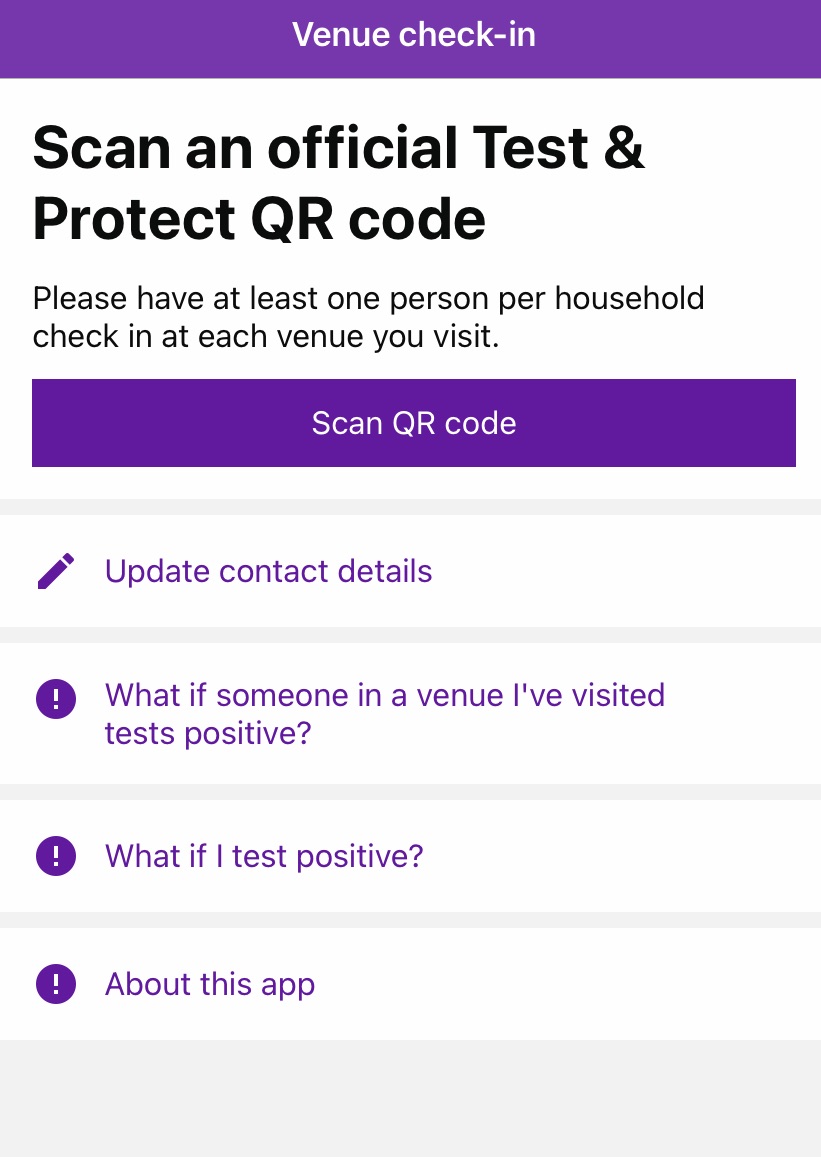
Check In Scotland is a way to collect the contact details of people who visit hospitality businesses, such as pub, bars, restaurants and cafes, that's designed to work with NHS Scotland's Test and Protect.

To help reduce the risk of transmission and support the Test and Protect contact tracing service, the Scottish Government has made it mandatory for hospitality venues to collect and manage customer contact details. 

In order to make it simple and secure for businesses and customers, the Scottish Government have created this voluntary free of charge service.

The service works by hospitality businesses displaying a Check In Scotland QR code poster at their venue, and asking anyone who visits to scan this QR code when they arrive. 

When a visitor first scans your venue's unique QR code, it will launch the Check In Scotland app or an online form on their phone. The visitor needs to enter their contact details, including their name and contact number, and click 'check in' to confirm they're at your venue. This will record the date and time they arrived.

When they leave, they should check out. If they still have the online form open on their phone, they just need to press 'check out'. If they don't have the online form open, they can check out by rescanning your venue's QR code.

If the visitor does not have a mobile phone, or cannot use the Check In Scotland service, businesses should take their details in another way, such as by pen and paper.

Businesses who already have a way of taking the details of people who visit their venue, such as your own QR code method, can carry on using this method instead of switching to a Check In Scotland QR code poster. But, as Check In Scotland is designed to work with Scotland's Test and Protect system, businesses are encouraged to switch. 

Avian Influenza: Housing measures set to be lifted on 31 March

Compulsory housing measures for poultry and captive birds are set to be lifted at the end of this month, the Chief Veterinary Officers from Scotland, England and Wales announced.

The housing measures, which were introduced across Great Britain in December as one of a range of measures to stop the spread of avian influenza, have been a vital tool in protecting flocks across the country from the disease which is circulating in wild birds.

The Scottish Government, Defra and Welsh Government have been working closely with industry and bird keepers to ensure that there are strict biosecurity measures in and around poultry premises to help keep flocks safe.

Measures put in place have been successful in helping to contain the disease and, provided that there are no new significant cases between now and the end of March, the current measures are due to be relaxed. The last confirmed case in poultry in Great Britain was over a month ago on 12 February in Scotland.

While the risk of bird flu has been reduced to ‘medium’, the risk of outbreaks is likely to persist for several weeks. As a result, enhanced biosecurity requirements that were brought in as part of the Avian Influenza Protection Zone (AIPZ) on 11 November will remain in place. Good biosecurity is the most effective measure of disease control available.

While it is essential to ensure effective biosecurity when there is an increased risk of bird flu, it is advised that poultry keepers apply enhanced biosecurity measures at all times to prevent and mitigate future outbreaks.

Bird keepers are advised to use the next two weeks to prepare the ranges and outdoor areas for release of the birds. This will include cleansing and disinfection of hard surfaces, fencing off ponds or standing water and reintroduction of wild bird deterrents.

In addition, when the birds are allowed out at the end of March all poultry and captive bird keepers will need to keep taking extra precautions, such as cleaning and disinfecting equipment, clothing and vehicles, limiting access to non-essential people on their sites, and workers changing clothing and footwear before entering bird enclosures.

Public health advice is that the risk to human health from the H5N8 virus strain is low and from the H5N2, H5N5 and H5N1 virus strains is very low. Food standards bodies advise that avian influenza poses a very low food safety risk for UK consumers, and it does not affect the consumption of poultry products including eggs.