One month to go to Clean Air Night

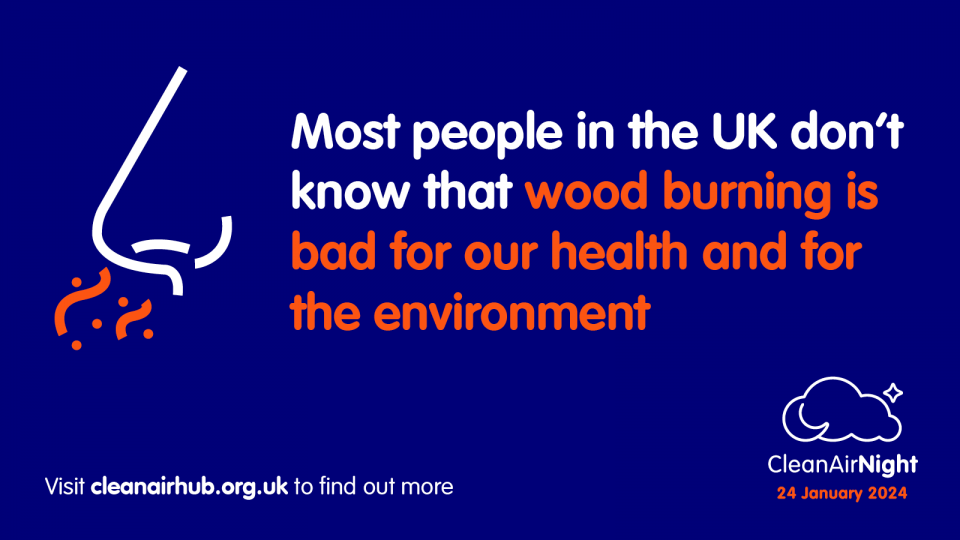
It’s just one month until Global Action Plan officially kick off the first year of the Clean Air Night campaign.

The campaign will spotlight three important truths about wood burning – that it harms your wallet, health and the planet. 

The campaign will run for four weeks in the lead up to Clean Air Night on 24 January, with a week that spotlights each of these key truths: 

  • Week 1: Introduction to Clean Air Night (13 – 19 December) 
  • Week 2: Wood burning harms your wallet (3 – 9 January) 
  • Week 3: Wood burning harms the planet (10 – 16 January) 
  • Week 4: Wood burning harms your health (17 – 23 January) 

To make it as easy as possible for you to take part in Clean Air Night, Global Action Plan are providing dedicated social media resources for each of these weeks – as well as resources that can be used throughout the campaign and can be accessed here.

Scottish vaping campaign launched

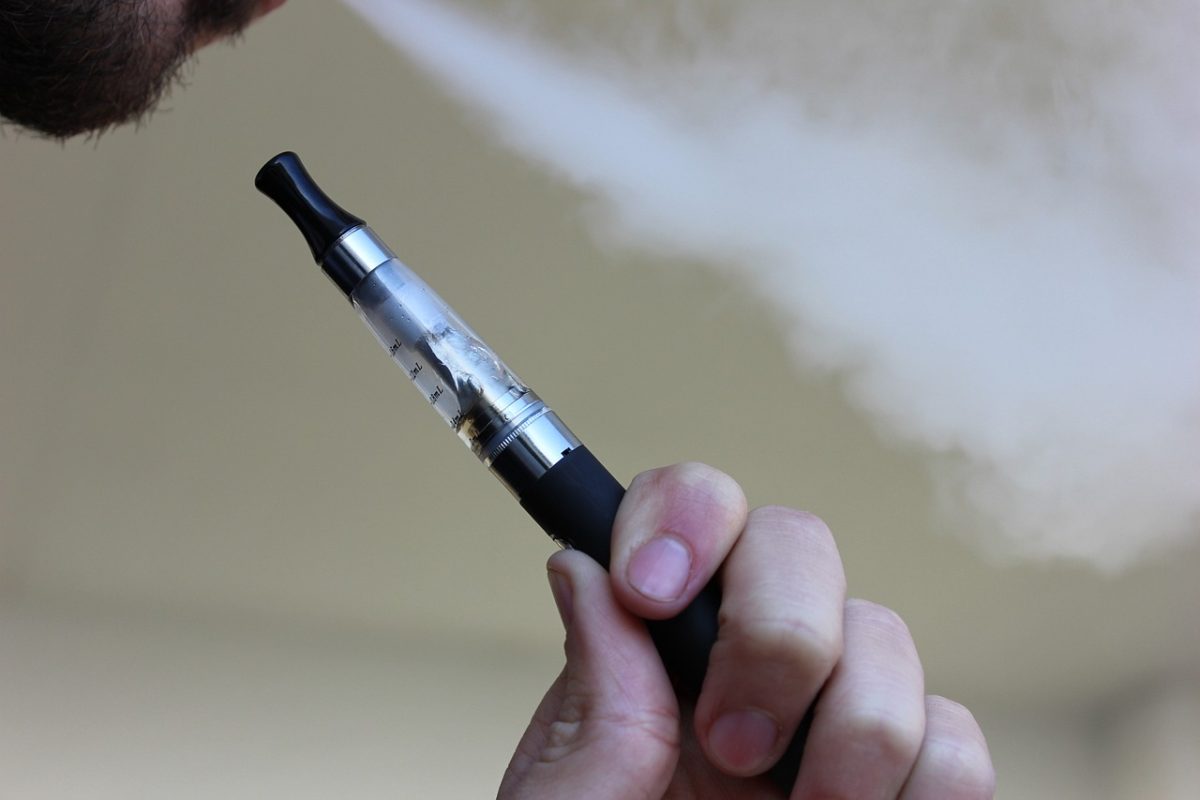
A new marketing campaign informing parents, carers and school pupils of the dangers of vaping has been launched by the Scottish Government.

The ‘Take Hold’ marketing campaign will increase awareness of the harms and risks of nicotine addiction associated with vaping, with schools across Scotland provided with digital guidance packs and resources for posters along with radio and outdoor advertising. Its key message is that vapes may quickly become harmfully addictive for children and young people, affecting their concentration, mental health and mood.

It comes as a new Tobacco and Vaping Framework is published, setting out actions which will be taken to create a tobacco-free generation by 2034.

Vaping addiction soon takes hold – NHS inform 

Scottish Government publish new Tobacco and Vaping Framework

The Scottish Government have published a new Tobacco and Vaping Framework, which sets out actions to be taken to create a tobacco-free generation by 2034.

The Framework for reaching the 2034 goal includes action to raise the age limit for sales of tobacco and plans to improve services to help people quit. In addition, the Scottish Government will continue to review what further action is needed to limit the appeal of vapes to children, young people and non-smokers during the first phase of the framework which will run until November 2025 .

Earlier this month, the UK Government set out its plans for a “smoke-free generation” by phasing out the sale of cigarettes. The Tobacco and Vapes Bill going through Westminster will restrict the sale of tobacco so anyone turning 14 this year or younger will never legally be sold cigarettes. Scottish Ministers are producing their own framework which will complement this, with the cigarette phase-out also taking place in Scotland.

Key Framework actions are listed here Tobacco and Vaping Framework: Roadmap to 2034 – gov.scot (www.gov.scot)

The first 2 year implementation plan actions are list here Tobacco and Vaping Framework: Roadmap to 2034 – gov.scot (www.gov.scot) and these include an awareness raising campaign on e-cigarettes, work on pack inserts and age of sale, including potentially extending UK legislation to include age of sale for e-cigarettes, price levers, enforcement, review hospital grounds restrictions, and improving transparency and accountability.

The Framework replaces the previous 5-year action plans enacting the 2013 strategy with an overarching Tobacco and Vaping Framework, which will be underpinned by shorter action-focused 2-year implementation periods.

The new action plan was developed through engagement with a working group of public health experts, including ASH Scotland, Public Health Scotland, Cessation coordinators, academics and The Society of Chief Officers of Trading Standards in Scotland. Engagement also included views from the Poverty Alliance Scotland and from the 11th Citizen Panel for Health.

Open Call for experts for the Advisory Committee on Public Health Emergencies (PHE)

The European Commission have made a call for experts for the Advisory Committee on Public Health Emergencies (PHE).

The mission of the group at the request of the Commission or the Health Security Committee, carry out the tasks set out in Articles 23 and 24 of Regulation (EU) 2022/2371.

Although the Commission has considerable in-house expertise, it needs specialist advice from outside experts as a basis for sound policymaking. This may be provided by groups of experts or external consultants, or take the form of studies.

A Commission Expert group is explained here.

For more information and to apply see here – the deadline is 15 December.

Tackling antisocial behaviour

Preventing and addressing antisocial behaviour will be the focus of a new independently chaired working group being set up by the Scottish Government.

Members will look at the current approach and make recommendations on what long-term changes can be made to reduce such behaviour and support victims. It is expected that the group will provide regular updates and present their conclusions to Ministers by the end of 2024.

The new group was announced following the publication of a joint report on antisocial behaviour by the Scottish Government and the Scottish Community Safety Network.

Community Safety Minister Siobhian Brown, who is bringing together the working group, said:

“We want everyone to be, and feel, safe in their community and we are committed to tackling all forms of antisocial behaviour. Reported antisocial behaviour has broadly been in decline over the last decade, but the recent disorder on Bonfire Night, in particular, has shown that where issues arise, these can have a very serious impact for many people.

“The report published today recommends that we need to consider how we best develop our long-term approach to preventing and addressing this type of behaviour. That is why I will be convening an independently chaired working group. It is nearly 20 years since the Antisocial Behaviour etc. (Scotland) Act 2004 was introduced and it is right that we examine whether this remains fit for purpose and that we assess our wider approach.

“I am grateful to those who took part in the engagement work with the Scottish Government and the Scottish Community Safety Network and shared their views and experience of antisocial behaviour. This report will inform the work of the new group.”

Director of the Children and Young People’s Centre for Justice Fiona Dyer, who will be one of two chairs of the working group, said:

“I am really looking forward to working with colleagues to support the prevention of antisocial behaviour across Scotland. Research demonstrates the vital importance and value of better engaging, enabling, and supporting individuals and their communities to reduce incidents of antisocial behaviour.  

“Through encouraging actively social behaviour within local communities, we can collectively address current issues and develop an inclusive and effective strategy that Scotland will be proud of.”

Joint co-chair Lorraine Gillies, Chief Officer at the Scottish Community Safety Network, said:

“Ultimately, we believe victims will experience less antisocial behaviour with a changed approach, making our communities safer places. We believe in taking evidence-based approaches to what works to reduce crime and antisocial behaviour, focused on tackling root causes and working together with communities to find solutions.

“I welcome the publication of our co-authored report – written in partnership with the Scottish Government – and the announcement of an independent working group, set up to review antisocial behaviour in-depth. I look forward to pursuing this work and, in doing so, improving people’s lives.”

City of Edinburgh Council to investigate dog DNA database to tackle fouling

An Edinburgh councillor is calling for a Dog DNA register to be set up to tackle dog fouling across the capital.

The Conservative councillor tabled a motion on the problem at the Transport and Environment Committee on Thursday 16th November and calls for a report to be provided to the Committee presenting options to help combat dog fouling that includes improving enforcement, the use of Fixed Penalty Notices, and the practicalities of establishing a Dog DNA register for the city, how it could be enforced, likely costs to set up and run, and how much might be funded through issuance of fines.

The motion added that in 2021, only four fixed penalty fines were issued by City of Edinburgh Council reflecting the difficulties prosecuting under the current regime even though it only requires the evidence of one witness to justify a fine for dog fouling.

It also added that the number of dog fouling complaints raised by the public is low and mostly reflects apathy with lack of enforcement rather than concern about the problem.

The scheme would see dog owners having to register their pets with the council, allowing it to test samples of dog mess left in the street and issue fines accordingly.

Conservative Councillor Christopher Cowdy said efforts made so far by the authority to address the issue had not worked.

Councillor Cowdy admitted it “might take a couple of years” to get up and running but said Edinburgh could be the “vanguard for combating the national problem”.

He said: “I suppose I thought about a dog DNA test as being the only real way you can make out for definite whose dog did what.

“The general idea I’m thinking of is there would be an Edinburgh by-law that would require dog owners to register their dogs with the city council who would hold a database.

“You would be obliged to bring your dog, a DNA swab would be picked up from the dog and recorded on the database, and then if there could be a team of wardens searching for dog foul they would pick it up, take a test from it and hopefully track it down.”

He said: “There are obviously issues that most responsible dog owners pick up after their dog anyway, and irresponsible dog owners might not be inclined to register their dog in the first place.”

Councillor Scott Arthur, Transport and Environment Convener, said: “Tackling the issue of dog fouling is a priority for us – it’s unacceptable that a small minority of owners should leave dog’s dirt anywhere in the capital. 

“So I look forward to a report coming to a future committee exploring different ways of reducing this, on top of the work already being carried out by our Waste and Cleansing teams.”

The Cows are Mad podcast about BSE epidemic

The Cows Are Mad podcast available on BBC Sounds dives into the history of the 1990s BSE epidemic. 30 years on, scientists and activists are still searching for answers to two big questions: where did Mad Cow Disease originally come from and how did humans get infected?

The podcast centres on a deserted factory in Kent that processed cows suspected of infection and exposes its vital role during the BSE outbreak in the ’80s and ’90s.

The podcast also taps into the community’s anxieties, especially as science still can’t pinpoint the disease’s origins or how it jumped to humans. It’s a compelling listen that pairs well with mystery and real-life intrigue, leaving you considering unanswered questions.

The Cows Are Mad is a natural sciences podcast by BBC Radio 4.

New Food Standards Scotland and Food Standards Agency report highlights food safety and standards resourcing challenges

Food Standards Scotland (FSS) and the Food Standards Agency (FSA) have published their annual ‘Our Food’ report, which reviews food standards across the UK for 2022. This is the second report since the UK left the EU and is an independent and evidence-based annual assessment of food standards across all four nations.

Overall, food standards remained stable in 2022, despite pressures including inflation, labour shortages and the war in Ukraine. However, the report identifies shortages in key occupations needed to keep food safe, such as vets and food inspectors.

Without enough people with the right skills to deliver essential food controls, it will be more difficult to identify, monitor and respond to risks to food safety, leaving consumers and businesses vulnerable.

FSS and the FSA are calling on government, local authorities, professional bodies and industry to:

  • Address the decline in local authority Trading Standards officers, Environmental Health and Food Safety officers to ensure food standards are maintained;
  • Tackle the shortage of Official Veterinarians to protect animal health and welfare and trade and assure food hygiene standards;
  • Share more and better-quality information across the food industry to help stop criminal gangs and tackle food crime that costs the UK up to £2 billion per year; and
  • Introduce import controls on food imported from the EU to help reduce the risk of unsafe food entering the UK from the EU.

Confidence in the food system underpins an industry worth £240 billion and supports good animal welfare, farmers, food processors, international trade and the UK’s vibrant food culture.

Heather Kelman, Chair of Food Standards Scotland said: 

“It is encouraging to see that in 2022, amid several significant challenges both here in the UK and further afield, the overall safety and standards of our food has been upheld to the very high standards which we expect. 

“However, we must recognise the very significant challenges ahead and the potential problems that a lack of resourcing, specifically within environmental health officer and official veterinarian roles, may cause to the overall food system. It is now more important than ever for those who govern the system, as well as everyone involved in food production, retail and distribution, to work together to ensure food is safe and consumers and trade are protected. 

“It is critical that, together, we do everything we can to ensure we have a modernised system of assurance to support businesses that provide safe food for everyone and that the UK’s high food standards are maintained, in spite of the cost and workforce pressures we continue to face.”

Professor Susan Jebb, Chair of the Food Standards Agency, said:

“The food system across the UK experienced significant challenges throughout 2022, with the rising cost-of-living and inflation impacting grocery bills for consumers, and food businesses feeling the pressure of labour shortages and increased supply chain costs.

“Despite these pressures, I’m encouraged that our report indicates that overall, food standards have remained stable. However, food safety and standards hinge on good procedures and skilled people to ensure that the right checks are carried out. It takes time to recruit and develop these skills and we worry that without specific action to boost the workforce, specifically to recruit more official veterinarians and local authority inspectors, it will not be possible to maintain these high standards in the future.

“Failure to recruit and train professionals to key posts can have reverberations for many years to come. We ask governments across the UK, and others, to work with us to address these matters in the coming year so that people in the UK can continue to have food they can trust, and the strong reputation of British food abroad is maintained.”

Workforce data in the report shows a 14% decline in food hygiene posts in Local Authorities in England, Wales and Northern Ireland over the last decade, with over 13% of available posts vacant. In Scotland, the number of food law officers (undertaking both food hygiene and food standards work) has fallen by just over a quarter (25.5%) compared to 2016/17.

The number of UK food standards officers has fallen by 45% compared to 10 years ago. The UK veterinary profession has experienced a 27% decline in people joining the profession between 2019 and 2022, creating significant challenges in securing enough Official Veterinarians (OVs) for the future.

The report highlights the risks that come from these falling numbers. A lack of Official Veterinarians poses risks to animal health and welfare and the potential disruption of domestic food supply and the ability to export products of animal origin. Workforce pressure experienced by Local Authority teams risks hampering their capacity to conduct critical food safety and standards checks in food businesses.

Annual report on private water supplies published

The 2022 Annual Reports for Private Water Supplies has been published by Scotland’s Drinking Water Quality Regulator.

In 2022, the data provided to the DWQR by local authorities showed that there are 22,829 private supplies in Scotland. This data confirms that around 190,000 people live or work in premises that rely daily on a PWS. This is about 3.5% of the Scottish population. This figure, however, does not take into account the large numbers of people such as visitors and tourists who may use premises with a private water supply.

The majority of PWS are located in rural areas, though some are located in areas where there is a public supply of water available. Highland Council has the most regulated supplies, but Aberdeenshire has by far the largest number of PWS overall.

All Regulated supplies must be tested for a specific set of parameters (chemical and microbiological) that are important for public health. In 2022 the parameter with most failures was Coliform Bacteria, with 25% of samples failing this test. This compares with 23.1% in 2021. E. coli and pH were the next most commonly failing parameters, reflecting the lack of robust treatment on many private water supplies. Only one enforcement notice was issued by local authorities in 2022 for Regulated supplies.

Specific legislation and guidance is in place for PWS for local authorities. This includes The Water Intended for Human Consumption (Private Supplies) (Scotland) Regulations 2017 (“the 2017 Regulations” The Water Intended for Human Consumption (Private Supplies) (Scotland) Regulations 2017 (legislation.gov.uk) and The Private Water Supplies (Scotland) Regulations 2006 (“the 2006 Regulations”) The Private Water Supplies (Scotland) Regulations 2006 (legislation.gov.uk).

New campaign to highlight that wood burning is a significant source of air pollution

Global Action Plan – the organisers of Clean Air Day, the UK’s largest public engagement campaign on air pollution – are launching a new sister campaign to shine a light on the uncomfortable truth about wood burning.

Clean Air Night will bust key myths about wood burning by providing information to the public highlighting that wood burning is a significant source of air pollution that harms our health.

The campaign will run for four weeks, culminating in Clean Air Night on Wednesday 24 January 2024.

Starting at sundown (4:35pm) on Clean Air Night, leading experts will further reveal the truth about wood burning to the public through a series of videos. There will also be a Clean Air Night Summit, where organisations and local authorities can speak directly to experts and share learnings.

Clean Air Night has been developed using the latest research into how to communicate about wood burning, recently shared with the sector in a toolkit produced by Global Action Plan in partnership with Impact on Urban Health, behavioural experts Kantar and creative agency Dog, Cat & Mouse.

Any public sector or non-profit organisation who wants to see and breathe clean air can become an official supporter of Clean Air Night for free.

We will be producing free resources for supporters of Clean Air Night so they can share the truth about wood burning with the public, helping them to protect themselves, their families and their communities. This will include a communications toolkit including week-by-week social media templates, newsletter copy and downloadable posters.

There are also many ways for for-profit organisations, schools and individuals to engage with the campaign.

Winter Preparedness

Ahead of 23/24 winter season, ARHAI Scotland and NHS Education for Scotland have collaborated to relaunch a set of key infection prevention and control messages, that can be used to support health and care settings.   

They comprise of 9 infographics for staff to use locally, as part of social media content, intranet posts and general Infection Prevention and Control communications which can be access here https://mailchi.mp/nes.scot.nhs.uk/winter-preparedness-202324

Check out how you can use these infographics in the following video: https://vimeo.com/870242057?share=copy

UK Government publish new guidance on damp and mould for rented housing providers

As part of the UK Government’s response to the Coroner’s report into the tragic and avoidable death of Awaab Ishak, they have published guidance on damp and mould in the home.

This guidance delivers delivers on the UK Government’s commitment in response to the Coroner’s ‘Prevention of future deaths’ report following the death of 2-year-old Awaab Ishak from a severe respiratory condition due to prolonged exposure to mould in his home.

This guidance has now been published. “Guidance on understanding and addressing the health risks of damp and mould in the home – For social and private rented landlords and other providers of residential accommodation”, has been written in response to the Coroner’s report and recommendation that evidence on the risks of damp and mould should be made accessible to the housing sector. This new guidance clearly sets out the legal responsibilities of social and private sector landlords to their tenants and the serious health risks that damp and mould pose.

The guidance is published jointly by the Office for Health Improvement and Disparities, Department for Levelling Up, Housing and Communities, and the UK Health Security Agency, following extensive engagement with the housing and health sectors, including tenant representative groups.

The UK Government is clear that damp and mould should not be dismissed as a ‘lifestyle choice’ and that action to remove pervasive damp and mould must be taken by landlords. The guidance makes clear that it is the responsibility of landlords to identify the underlying causes of damp and mould – such as structural issues or inadequate ventilation – and to find long term solutions.

The guidance also sets out how living in a home with damp and mould can significantly affect the physical and mental health of tenants and outlines how people with certain health conditions, children and older adults are at greater risk of more severe health impacts.