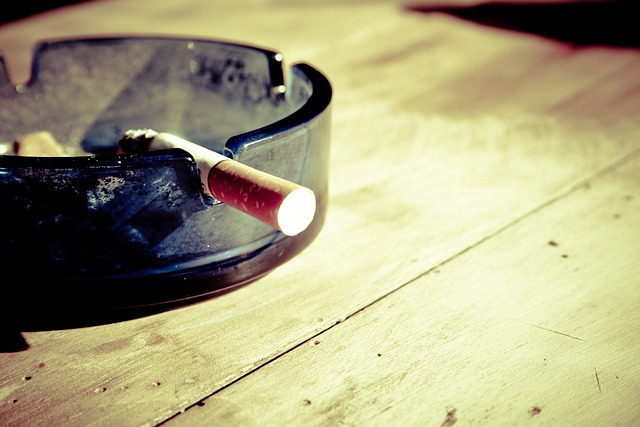
The UK government is considering restricting smoking in some outdoor public areas to help cut deaths from tobacco use and reduce the burden on the NHS.
The plans are not concrete, however measures could involve banning smoking in pub gardens, outdoor restaurants, and hospital grounds. Any new ban would apply only in England, but the other devolved nations could follow suit.
When asked about media reports on the suggested ban the prime minister, Keir Starmer, confirmed that the government was considering it. He told the BBC on 29 August, “My starting point on this is to remind everybody that over 80,000 people lose their lives every year because of smoking,” he said.
“That is a preventable death, it’s a huge burden on the NHS and, of course, it is a burden on the taxpayer. So, yes, we are going to take decisions in this space, more details will be revealed, but this is a preventable series of deaths and we’ve got to take action to reduce the burden on the NHS and the taxpayer.”
The prime minister added: “It is important to get the balance right, but everybody … who uses the NHS will know that it’s on its knees.”
While precise plans for the curbs are likely to change after consultations, it is understood that ministers are in favour of many of the suggested ideas to limit outdoor smoking.
The King’s Speech at the state opening of Parliament last month promised to reintroduce legislation proposed by the previous government, which would have outlawed the sale of tobacco to anyone born on or after January 2009.
In Australia, smoking outdoors is already regulated, where bans at many outdoor spaces have been in place for two decades. Rules vary from state to state but, broadly speaking, at pub gardens and parks, designated smoking sections or zones are set up to protect non-smokers from secondhand smoke. At beaches and playgrounds, smoking is banned altogether.
Food Standards Scotland (FSS) is issuing information to consumers to help identify counterfeit vodka products following more seizures over the weekend.
The counterfeit vodka, so far recovered in local convenience stores in Coatbridge and Glasgow, was sold in 35cl bottles (commonly known as half bottles) and fraudulently labelled as Glen’s.
FSS have been working closely with the brand owner for Glen’s vodka to try and mitigate the risk to consumers. As a result, additional information is being provided to help them distinguish between genuine and counterfeit products.
Every genuine bottle of Glen’s vodka has a laser etched lotcode applied to the bottle between the rear label and the base of the bottle.
They will also have the following markings on the base of the bottle – the highlighted three identifiers will not vary (position or detail).
A spokesperson for the Loch Lomond Group which owns Glen’s Vodka, said: “Our priority is the health and safety of the public which includes our many thousands of loyal Glen’s customers. We are working hard to support the excellent efforts of Food Standards Scotland and the other authorities involved to address the matter urgently. We would urge any customers who suspect they may have a counterfeit product to contact their local council’s environmental health service or the Food Standards Scotland Food Crime and Incidents Unit as quickly as possible.”
As reported previously, lab results from counterfeit vodka sampled in August 2024 confirmed the presence of the chemical isopropyl.
Isopropanol (isopropyl, IPA) is a toxic alcohol not suitable for human consumption. Ingestion of any amount can lead to toxicity and larger amounts can be fatal. Ingested IPA will be converted to acetone and so onset of symptoms may be immediate or delayed, for up to 30 hours post ingestion. Symptoms include nausea, vomiting and abdominal pain, intoxication, respiratory depression and coma. Cardiovascular collapse is also possible. Anyone with symptoms should seek medical attention call NHS 111 in the first instance or 999 in an emergency. Please be aware IPA has a strong odour and it may be possible to detect contaminated products by smell alone.
FSS has today issued a food alert for action notice to all Local Authorities in Scotland, requesting them to identify and visit relevant establishments in their area to check for counterfeit products and make businesses aware of the issue.
Gordon Mitchell, Head of Crime Operations at FSS, said: “Following further seizures of counterfeit vodka over the weekend, we need the public to be aware of any factors which may help them distinguish counterfeit products from genuine Glen’s. As well as a distinct smell, the counterfeit products are bottled differently to genuine Glen’s and the images provided will help consumers to tell the difference.
“As we do not yet know the scale of distribution of these products, but we do know the potential dangers associated with consumption, we are urging consumers once again to be extremely vigilant and to please get in touch if you have any information relating to the counterfeit vodka. We would also remind retailers that they should only be purchasing products from reputable suppliers.”
If anyone believes they may have purchased such products, we would ask you to contact the FSS Scottish Food Crime and Incidents Unit – foodcrime@fss.scot – for further advice. Do not drink any of the product and please store in a safe place to allow FSS to collect and analyse.
If anyone has any information on the manufacture or sale of counterfeit alcohol then please contact the Scottish Food Crime Hotline (0800 028 7926) or online, in partnership with Crimestoppers. The hotline is free and anonymous.
Recently, the Friends of the Pentlands unveiled a memorial to the late John Stirling, founder of “Friends of the Pentlands” and past President and Honorary Member of REHIS. John was a tireless enthusiast for improving the environment of the hills and increasing access for all. The memorial takes the form of a 3-D relief map of the Pentlands and is located beside the wildflower meadow opposite Harlaw Visitor Centre.
Picture from Facebook – John’s wife, Linda second from left with daughter Lara and son Ewan next to her.
A study published in Eurosurveillance to investigate an outbreak of Shiga toxin-producing Escherichia coli (STEC) O157:H7 in the UK identified contaminated lettuce as the most likely source of the infection, and determined that heavy rainfall and flooding may have carried STEC from animal faeces to the lettuce crops. More heavy rainfall events are expected due to climate change in the future, leading to increased impacts on health and food security.
After a large outbreak of STEC 0157:H7 was detected in the UK in September 2022, a national-level investigation was initiated to identify the source of the outbreak and inform risk mitigation strategies. Whole genome sequencing (WGS) was used to identify outbreak cases, and strongly suggested a link to a single source.
Overall, 259 cases with illness onset dates between Aug. 5 and Oct. 12, 2022, were confirmed across the UK. A national outbreak was declared in early September. Epidemiological investigations identified a UK-grown, nationally distributed, short-shelf-life food item as the source.
Patients lived in all four nations of the UK. There was a higher proportion of females sick, with 142 compared to 117 male cases. The age groups most affected were 20- —to 29-year-olds and 30- —to 39-year-olds, according to the study published in the journal Eurosurveillance.
Seventy-seven confirmed cases attended hospital for their symptoms and 75 were admitted. None of them were diagnosed with hemolytic uremic syndrome (HUS) and no deaths were reported.
Analytical epidemiology and food chain analysis suggested lettuce was the likely vehicle of infection. Food supply chain tracing identified the grower as the likely implicated producer.
Loyalty card data revealed no strong link to one type of salad leaf. Supply chain information highlighted the distribution of suspected salad products to the UK and Ireland.
A lettuce grower was directly or indirectly linked to all the food service establishments or retailers of interest. This included ten retailers, seven processors, 25 suppliers, three food services, four manufacturers, and 14 wholesalers.
When authorities visited the grower, the harvest had ended. A hazard analysis and critical control points (HACCP) plan was in place, and legislative requirements were followed; no failures were identified in storage conditions or temperature control. The grower reported that produce at the farm was exposed to standing water following heavy precipitation and local flooding.
Fresh produce growers and manufacturers have been asked to consider extreme weather and flooding as hazards for pathogens such as STEC and determine proportionate controls, including pre-and post-harvesting checks, finished product testing, and irrigation water use.
Scientists used data on rainfall and temperature, information about land use, and information about sheep locations to better understand the events that led to the outbreak and the location of the lettuce grower. Analysis of meteorological data revealed over two months of rainfall recorded in an otherwise drought-like situation in the region where the grower was located.
They found lettuce incriminated in the outbreak may have been contaminated by heavy rainfall and flooding, transporting STEC from animal feces to crops in fields.
A limitation of the study was that no microbiological sampling was done from known animal reservoirs, products, or the environment.
Adverse weather conditions occurred within two weeks of the major peak of case symptom onset dates. This was consistent with the expected time taken for fresh lettuce to make its way from farm to fork, added to the known incubation period following exposure to STEC.
A small number of illnesses pre-dated the weather event, and a few predominantly secondary case reports in late September and October 2022 were noted.
Seven isolates of STEC O157:H7 closely related to the outbreak strain were previously reported, with three cases in 2019 and two each in 2020 and 2021.
“We hypothesize that both early and late primary cases, as well as the cases notified in previous years, could be explained by low-level environmental contamination due to the persistence of the organism in the environment,” said researchers.
The Scottish Kept Bird Register (SKBR) has now been launched. It has been developed in support of the Avian Influenza (Preventive Measures) (Scotland) Amendment Order 2024, which requires all bird keepers – even those who keep only a single bird – to officially register their bird location(s).
In Scotland, keepers have between 1 September and 1 December 2024 to register the location of their birds. Those previously registered on the GB Poultry Register will be required to re-register on the SKBR between these dates.
The registration requirement does not apply to birds on the premises that belong to the order psittaciformes (parrot family, including budgerigars) or passeriformes(perching birds, including jays and finches), which are:
fully housed indoors with no outdoor access, or
housed outdoors in a fully enclosed structure
However, any birds that are taken outdoors at any time, for example to be exercised, trained, or taken to bird gatherings and/or shows, must be registered.
Taking an exempt bird to visit a veterinary practice does not trigger the need for registration.
By registering their birds, keepers will ensure they receive important updates relevant to them, such as on any local notifiable avian disease outbreaks and important information on biosecurity rules to help protect themselves and their flocks.
Food Standards Scotland (FSS) is consulting on the implementation of the amendments being made to the Bread and Flour Regulations 1998 in Scotland which includes the introduction of the mandatory fortification of flour with folic acid.
This follows the 12-week UK wide consultation published in September 2022 and the publication of the Consultation and Government response published on 17 Jan 2024 which confirmed that the 1998 Regulations are to be amended as follows to;
Implement the public health policy across the UK to mandate the compulsory fortification of non-wholemeal wheat flour with 250 micrograms of folic acid per 100 grams of non-wholemeal wheat flour.
Increase the minimum level of calcium carbonate, iron, and niacin in non-wholemeal wheat flour in line with the 15% Nutrient Reference Value (NRV) per 100g of flour.
Replace the calcium specification in the Bread and Flour Regulations with the specification laid out in Regulation EC 231/2012 laying down the specifications for Food Additives.
Specify in the regulations that fortification only applies to non-wholemeal wheat flour derived from “common wheat”.
Introduce an exemption from fortification for flour produced by small-scale mills (applying to those producing less than 500 metric tonnes per annum).
Remove the requirement relating to minimum levels of iron, thiamine and niacin naturally present in wholemeal flour and replace with a legal definition that wholemeal flour must consist of the whole product from the milling and grinding of cleaned cereal.
Provide for an adjustment period of 24 months.
FSS would be grateful for your participation and feedback regarding any Scottish specific implications in respect of the changes and the estimated costs associated with the implementation of these changes to establish the accuracy of the costs.
The consultation can be accessed here and closes 27 September.
This year’s annual Health and Safety Update is taking place on the morning of Wednesday 4 September on MS Teams. There is an interesting line up of speakers planned. Don’t Miss Out! The programme and booking are available here, REHIS Health & Safety Update 2024 – REHIS
Southern Centre AGM
The Southern Centre is hosting a wider public health update event along with the centre AGM on Thursday 12 September 2024. The programme and booking form will be available soon.
Northern Centre AGM
The Northern Centre is hosting a ‘free to members’ update event along with the centre AGM on Friday 13 September 2024 (10.30am-2.00pm) via MS Teams. Non-members are welcome to attend the event for a fee of £20.
Members are encouraged to attend both the event and AGM and nominations for the Centre committee are welcome. Bookings can be made using this link. REHIS Northern Centre Event and AGM – REHIS
Annual General Meeting and EH Update
Diary Date – This year’s AGM and ‘free to members’ Environmental Health update event, will be held on Friday 22 November as a hybrid meeting at the COSLA Conference Centre, Edinburgh and on MS Teams.
People across Scotland are being asked to have their say on a minimum charge for single-use cups to promote responsible consumption and cut waste.
The Scottish Government is consulting on the possible introduction of a 25p charge to all single-use drinks cups when a drink is bought, regardless of material. Exemptions would apply for specific locations and uses, such as in schools. Free drinks in hospital or care settings would not be included in the scope of the charge.
As with the single use carrier bag charge, enforcement will gall to Local Authorities. Any supplier failing to charge or to comply with the recording requirements will be committing an offence and liable for a fine on conviction. Local authorities will also have the power to issue fixed penalty notices.
There are already similar charging schemes for cups established in Europe – with the Netherlands introducing a guideline charge of 25 cents on plastic, single-use cups in 2023. Legislation allowing the introduction of environmental levies on single- disposable cups in the Republic of Ireland was also passed in 2022 – although it has yet to come into force.
Under consultation proposals, retailers would be able to retain reasonable implementation costs from the charge – mirroring the approach taken for single-use carrier bags. It also seeks views whether the net proceeds from a charge should be kept by businesses and used for good causes or collected by local or national government.
An estimated 388 million single-use cups were used in Scotland in 2021-22 creating 5,400 tonnes of waste.
The use of single-use plastic carrier bags fell by 80% in the first year in Scotland, following the introduction of a 5p charge in 2014. The charge is widely believed to be a success with the Marine Conservation society annual litter survey reporting an 80% drop in plastic bags found on UK beaches since its implementation.
Acting Net Zero Secretary Gillian Martin said: “The success of the single-use carrier bag charge shows how an environmental charge can be an effective tool to change people’s behaviour and encourage responsible consumption.
“While many businesses already have offers in place to encourage the use of reusable drinks cups, hundreds of millions of single-use cups are still being discarded, creating 5,400 tonnes of waste every year. Many of these cups end up littering our roadsides, town centres, beaches and parks.
“Introducing a national charge could provide consistency for consumers, provide a level playing field for retail and businesses and help to drive forward sustainable behaviours. Our proposed approach is similar to the charge for single-use carrier bags and will be familiar to both suppliers and the public. We hope this means that it will minimise any administrative burden on businesses and make it easy for individuals and organisations to adopt.
“I urge everyone to have their say so we ,can choose the most sustainable option for both people and businesses while helping to tackle litter, reduce waste and cut emissions.”
Calum Duncan, Head of Policy and Advocacy at the Marine Conservation Society, said:
“Our volunteers have consistently recorded single-use disposable cups on over half of UK beaches surveyed. We need to see charges on these kinds of items to reduce litter in our seas and prevent it from damaging our precious marine life.
“We know that policies like this work, with our data recently showing an 80% reduction in the average number of plastic carrier bags washing up on beaches since charges on them were introduced.
“We look forward to a similar decline in disposable cups once a charge is introduced, and need further measures from governments to move towards a society where refillable and reusable options are the norm.”
The consultation can be accessed here and runs until 14 November.
The prevalence of ticks in Scotland will increase by a quarter under the most optimistic climate change scenario, according to new modelling by mathematicians at the University of Stirling.
Ticks are tiny spider-like creatures usually found in grassy and wooded areas that can spread viral and bacterial infections, including Lyme disease.
If global temperatures are limited to 1C by 2080, the prevalence of ticks will increase by 26%, but under the 4C temperature rise scenario the number of ticks will almost double – a 99% increase – by 2080.
Only the highest peaks in Scotland will remain too cold for maintaining tick populations if temperatures rise by 4C, according to the research.
Mathematicians in the University of Stirling’s Faculty of Natural Sciences developed a new model which predicts tick density under varying climate change scenarios and produced maps which show which areas of Scotland will be worst affected.
Professor Rachel Norman, who led the study which was published in the Royal Society journal Interface, said: “The model predicted an increase in tick densities and a spread of tick distribution over Scotland for all climate warming scenarios by 2080.
“The strength of these predicted increases in tick density varied depending on the habitat. While woodland habitats were predicted to experience the highest absolute increases, the largest proportional increases were predicted for the slopes of mountains, known as montane habitats.
“Many of these areas that were predicted to be tick-free under recent climatic conditions were predicted to become warm enough to allow sustained tick populations by 2080.”
Professor Norman and her team developed a powerful tool that is dynamic and mechanistic, yet mathematically relatively simple so it can be adopted by non-specialists. In the future, it could be adapted to predict disease risk.
Professor Norman said: “Scotland is an ideal country for pioneering this approach as the issue of ticks and tick-borne disease risk is of increasing concern with reported increases in tick abundance and Lyme disease incidence.
“This modelling has allowed us to identify which geographic areas and habitats might be particularly vulnerable to increased tick densities owing to climate warming.
“While we developed the approach to predict tick densities over Scotland, it could be easily used for other areas and other vector species, and pathogens could be added to the model, enabling predictions of disease risk.
“Indeed, this methodology could be used more broadly to understand the dynamic response of populations over time to a variety of environmental changes and provides a neat new method in the modelling toolbox for researchers to choose from.”
The research was funded by the Macaulay Development Trust and the University of Stirling for a PhD studentship for co-author of the paper Dr Adrian Worton. Co-author Dr Lucy Gilbert of the University of Glasgow was supported by the Scottish Government’s Rural and Environmental Science and Analytical Services Division including as part of the Centre of Expertise on Animal Disease Outbreaks (EPIC).
Basildon Council has welcomed the news that local firm, JVP Leisure Ltd, has been successfully prosecuted following an investigation led by the council’s environmental health team.
JVP Leisure Ltd, the company owning the Festival Wakeboard Park, received a fine and was ordered to pay costs to Basildon Council, at a sentencing hearing at Basildon Crown Court on Wednesday 14 August 2024.
The prosecution followed an accident in which wakeboarder Euan Southcott sustained life changing injuries.
JVP Leisure Ltd, pleaded guilty following the incident in which the experienced 43-year-old wakeboarder fell whilst using the jumps at the leisure park on Saturday 6 June 2020.
An investigation by Basildon Council established that the company had failed to adequately maintain the polypropylene boards used to create the jump surfaces at the wakeboard park. When the customer landed, the board fractured resulting in life-changing injuries caused by the fractured edge.
Forensic checks showed that the board had deteriorated after being exposed to the elements for an extended period of time, resulting in hairline cracks, and some more visible cracks that should have been noticed during routine maintenance, thus weakening the structure.
Basildon Council’s investigation determined that the company had failed to assess the risk the use of the obstacles presented to members of the public and carry out adequate checks to ensure that the obstacles were maintained in a sound condition.
JVP Leisure Ltd C/O Andersons, Braintree Road, Felstead, Dunmow, Essex, CM6 3DJ pleaded guilty on 13th March 2024 to a contravention of the Section 3(1) of the Health and Safety at Work etc. Act 1974 and Regulation 3(1)(b) of the Management of Health and Safety at Work Regulations 1999. The company was fined £27,135 and ordered to pay costs of £25,000 to Basildon Council following sentencing on 14 August 2024 at Basildon Crown Court.
Rachel Glover, Basildon Council’s Head of Environmental Health welcomed the news: “I am pleased that JVP Leisure Ltd has been successfully prosecuted following a thorough investigation led by Basildon Council.
“Environmental Health has worked with JVP Leisure Ltd on a number of occasions prior to the accident to assist them with complying with the law. This incident would have been avoided by carrying out safe maintenance procedures and following safe working practices.”
“Basildon Council will not hesitate to take appropriate enforcement action where a business falls below the required safety standards.”
Cooking with gas may lead to excessive pollution levels in poorly ventilated indoor spaces, a new study had found.
In a paper published in Heliyon, researchers led by a team from the University of Birmingham set up air sensors in seven indoor and three outdoor locations in an Oxford-based house during March-June 2020 to observe different levels of NO2 and Particulate Matter (PM) over the period of 100 days. Data was combined with domestic activity logs to assess the impact of different chores – such as cooking and cleaning, undertaken by the householders and pollutant levels were compared the World Health Organization health-based guidelines.
Levels of NO2 were observed to be more than five times (562%) higher in the kitchen during the study compared to background levels, and four times (412%) higher than concentrations observed at the front of the house. The kitchen also saw guideline-breaking levels of NO2 each day during the study, and unventilated cooking with gas stoves and ovens were associated with peak air pollutants.
As with many households during the start of the pandemic, a spare bedroom was used as a study by the participants. Sensors in this bedroom observed the highest peaks of fine particles PM1 and PM2.5 in the house and activity logs show that the peaks also correspond with cooking activity as well as use of a printer. This suggest that pollutant emissions are travelling around the house, concentrating and accumulating in spaces with poor ventilation.
Dr Suzanne Bartington, Clinical Associate Professor in Environmental Health at the University of Birmingham and co-author of the study said:
“We were surprised by the high levels of particle pollution in the bedroom (used as a study) and the very high concentrations of NO2 from gas cooking in the kitchen which are higher than typical roadside concentrations albeit for relatively short durations. The key thing that we noted was that the high levels are associated with activities in the home and as a result there are both policy and individual actions that can be taken to limit indoor exposure.
“It seems what you do in the house may just as, if not more important, than where the house is for many around the country seeking to minimise their exposure to air pollutants.”
Dr Felix Leach, Associate Professor of Engineering Science at the University of Oxford and co-author of the study said:
“Too often when we think about air pollution, we think about road traffic and coal-fired power stations. However, we generate plenty of pollution in our own homes too. Thanks to the indoor environment, which is often very poorly ventilated – perhaps due to insulation efforts, this pollution can build up to far higher levels indoors than are ever seen outdoors.
“This study looks at how typical household activities can generate pollution that then moves round the house. I myself am much more mindful of my and my family’s indoor air pollution exposure as a result of having done this work.”
The research team acknowledge that the study was conducted during the first COVID-19 lockdown in March-June 2020. As a result, outdoor pollution levels were lower than the five-year average. In addition, there were higher levels of indoor activity with all residents working from home during the study.
The annual report from the National Records of Scotland shows that there were 1,172 drug-related deaths in Scotland in 2023; a 12% increase on the previous year after two years of decreases.
This is the second lowest number of drug misuse deaths since 2017, with 2022 seeing the lowest number.
Drug misuse deaths are more common than they were in 2000. After adjusting for age, the rate of drug misuse deaths were 4.2 times as high in 2023 than 2000.
The average age of drug misuse deaths has also increased from 32 to 45 since 2000.
Opiates and opioids, including heroin, morphine and methadone were implicated in 80% of all deaths.
Almost nine out of 10 drug misuse deaths were classified as accidental poisonings, with 7% classed as intentional self-poisonings.
People in the most deprived areas of Scotland are more than 15 times as likely to die from drug misuse compared to people in the least deprived areas. The association of deprivation with drug misuse deaths is much greater than with other causes of death.
Phillipa Haxton, Head of Vital Events Statistics, said:
“Today’s statistics show an increase in drug misuse deaths over the last year. The longer term trend shows that drug misuse deaths are still much more common that they were over two decades ago. In the medium term, today’s figures represent the second lowest number of deaths in the last six years.
“The statistics also provide information about the people who are dying from drug misuse. The figures show us that males were twice as likely to have a drug misuse death as females. Most of the increase in the past year was due to male deaths.
“Glasgow City and Dundee City had the highest rates of drug misuse deaths while East Renfrewshire and East Dunbartonshire had the lowest.”
The rate of drug poisoning deaths in Scotland was more than double the rates of other UK countries in 2022. The rate was 2.7 times as high as the rates for England and Northern Ireland, and 2.1 times as high as the rate in Wales. This is the most recent year that data is available for across the UK. When comparing Scotland and the rest of the UK, the drug poisoning definition should be used.
We use cookies to ensure that we give you the best experience on our website. If you continue to use this site we will assume that you are happy with it.